Greater Efforts to Save Premature Babies Inflates U.S. Infant-Mortality

(p. A13) The federally chartered Institute of Medicine issued a comprehensive report last month on the state of American health. Saying that “Other high-income countries outrank the United States on most measures of health,” the report concluded that the U.S. “is among the wealthiest nations in the world, but it is far from the healthiest.”
. . .
As the report’s authors point out, the U.S. has the highest infant-mortality rate among high-income countries.
. . .
Doctors in the U.S. are much more aggressive than foreign counterparts about trying to save premature babies. Thousands of babies that would have been declared stillborn in other countries and never given a chance at life are saved in the U.S. As a result, the percentage of preterm births in America is exceptionally high–65% higher than in Britain, and about double the rates in Finland and Greece.
Unfortunately, some of the premature babies that American hospitals try to save don’t make it. Their deaths inflate the overall infant mortality rate.

For the full commentary, see:
SALLY C. PIPES. “OPINION; Those Misleading World Health Rankings; The numbers are distorted because, for instance, U.S. doctors try so hard to save premature babies.” The Wall Street Journal (Tues., February 5, 2013): A13.
(Note: ellipses added.)
(Note: the online version of the commentary has the date February 4, 2013.)
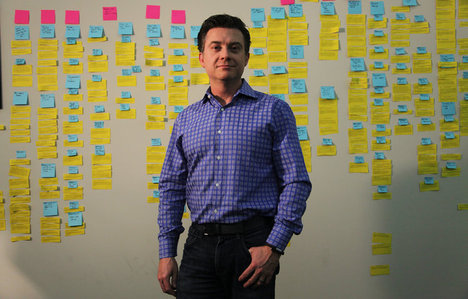
Driving to MobileIron Job Interview in $100,000 Car, Tells CEO Tinker You Are Not Hungry Enough

TinkerRobertMobileIronCEO2013-03-09.jpg “Above, Robert Tinker, the chief executive of MobileIron, at its offices in Mountain View, Calif.” Source of caption and photo: online version of the NYT article quoted and cited below.

(p. B2) “There are disruptions everywhere,” said Robert Tinker, the chief executive of MobileIron, which makes software for companies to manage smartphones and tablets. “Mobile disrupts personal computers, a market worth billions. Cloud disrupts computer servers and data storage, billions of dollars more. Social may be one of those rare things that is totally new.”

Relative to the size of the markets that mobile devices, cloud computing and social media are toppling, he says, the valuations are reasonable.
But most of these chief executives are also veterans of the Internet bubble of the late ’90s, and confess to worries that maybe things are not so different this time. Mr. Tinker, 43, drives a 1995 Ford Explorer that has logged 265,000 miles.
“If somebody comes to a job interview here in a $100,000 car, I know he’s not hungry,” he said. “The reality is, I’ve taken $94 million in investors’ money, and we haven’t gone public yet. I feel that responsibility every day.”

For the full story, see:
QUENTIN HARDY. “A Billion-Dollar Club, and Not So Exclusive.” The New York Times (Weds., February 5, 2013): B1 & B2.
(Note: the online version of the story has the date February 4, 2013.)

Jobs’ Protest Against Mortality: Omit the On-Off Switches on Apple Devices

(p. 571) . . . [Jobs] admitted that, as he faced death, he might be overestimating the odds out of a desire to believe in an afterlife. “I like to think that something survives after you die,” he said. “It’s strange to think that you accumulate all this experience, and maybe a little wisdom, and it just goes away. So I really want to believe that something survives, that maybe your consciousness endures.”
He fell silent for a very long time. “But on the other hand, perhaps it’s like an on-off switch,” he said. “Click! And you’re gone.”
Then he paused again and smiled slightly. “Maybe that’s why I never liked to put on-off switches on Apple devices.”

Source:
Isaacson, Walter. Steve Jobs. New York: Simon & Schuster, 2011.
(Note: ellipsis and bracketed “Jobs” added; italics in original.)

New York Resisted Roosevelt’s Enforcing “Stupid” Vice Laws

IslandOfViceBK2013-03-09.jpg

Source of book image: http://media.npr.org/assets/bakertaylor/covers/i/island-of-vice/9780385519724_custom-e38a25fc66f104a049d4d24aa39dbe92d42fbd57-s6-c10.jpg

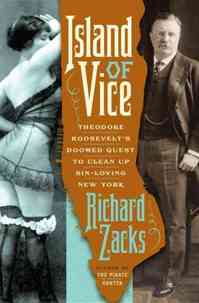
(p. C9) . . . as Richard Zacks’s excellent “Island of Vice: Theodore Roosevelt’s Doomed Quest to Clean Up Sin-Loving New York” ably shows, while we might like to believe that the stretch from 1970 to 1995 represents the city’s nadir, it was just about business as usual in New York over the centuries.

From its time as a Dutch colonial outpost, the city has always been pretty bad. You’d almost think New Yorkers prefer it that way. Of course, we don’t like fraud, robbery, assault, arson, rape or murder any more than anyone else does. But the deliberate injury of one’s fellow citizen isn’t the only way to break the law. There are also those crimes that fall under the broad category of “vice”: things such as gambling, prostitution, indecent exposure and selling alcohol at a convenient time. Historically, the average New Yorker has not greeted these acts with the same immediate urge to suppress that many of his or her fellow Americans have had. You don’t get a nickname like “The City That Never Sleeps” without having a certain amount of things worth staying up for.
. . .
In the end, Mr. Zacks’s exhaustively researched yet lively story is a classic battle between an irresistible force, Roosevelt’s ego, and an immovable object, the people of New York’s unwillingness to follow laws they thought were stupid. In this case, the object won, and handily. Mr. Zacks’s account of the way the city’s saloonkeepers instantly turned their establishments into hotels to take advantage of a loophole in the law is particularly amusing. Eventually, the police department, not unsympathetic to the Sunday tippler, began finding ways to wriggle out from under the commissioner’s thumb, and beer-friendly Tammany Hall, with the people solidly behind it, began peeling away his allies.

For the full review, see:
DAVID WONDRICH. “BOOKSHELF; Teddy’s Rough Ride.” The Wall Street Journal (Sat., March 17, 2012): C9.
(Note: ellipses added.)
(Note: the online version of the review has the date November 30, 2012.)

Book under review:
Zacks, Richard. Island of Vice: Theodore Roosevelt’s Doomed Quest to Clean up Sin-Loving New York. New York: Doubleday, 2012.

Scientist Sees Benefits in Plan to Increase Global Warming

(p. D2) Plants are . . . part of one theoretical plan for turning Mars into a suitable environment for human beings, a process called terraforming.
. . .
Chris McKay, a Mars expert at the NASA Ames Research Center, theorizes that engineers would first have to encourage the kind of global warming they want to avoid on Earth. This could be done by releasing greenhouse gases, like chlorofluorocarbons or perfluorocarbons, into the atmosphere. The goal would be to increase the surface temperature of Mars by a total of about 7.2 degrees Fahrenheit.
. . .
With the rise in temperature, heat-trapping carbon dioxide would eventually be released from the planet’s south polar ice cap, producing a further average temperature rise of even greater magnitude, perhaps as much as 70 degrees Celsius, or 126 degrees Fahrenheit.
These high temperatures would melt ice to produce the water needed for living things.

For the full story, see:
C. CLAIBORNE RAY. “Q & A; At Home on Mars.” The New York Times (Tues., December 11, 2012): D2.
(Note: ellipses added.)
(Note: the online version of the story has the date December 10, 2012.)

McKay wrote up some of his ideas in:
McKay, Christopher P. “Bringing Life to Mars.” Scientific American Presents: The Future of Space Exploration (1999): 52-57.

Many Corporations Refused to Finance Semiconductors

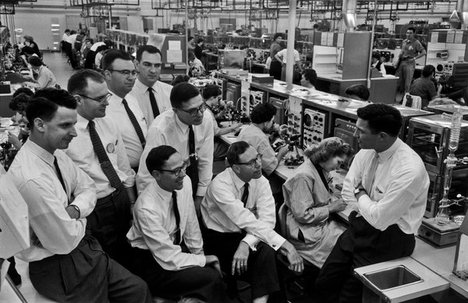
FairlchildSemiconductorEightFounders2013-03-08.jpg “Shown in 1960, the eight engineers who founded Fairchild Semiconductor and revolutionized world technology in “Silicon Valley,” an “American Experience” documentary, . . . .” Source of caption and photo: online version of the NYT review quoted and cited below.

(p. C4) “Silicon Valley” is a deceptively grand title for the new “American Experience” documentary Tuesday night on PBS. “Fairchild Semiconductor” would be more accurate.
. . .
One startling image shows a handwritten list of the many corporations that declined to bankroll the eight pioneers before Fairchild Camera and Instrument said yes. If any of them had possessed more foresight, the silicon chip might have belonged to National Cash Register, Motorola, Philco, BorgWarner, Chrysler, General Mills or United Shoe.

For the full review, see:
MIKE HALE. “Men Who Took Silicon to Silicon Valley.” The New York Times (Tues., February 5, 2013): C4.
(Note: ellipses in caption, and in quoted passage, added.)
(Note: the online version of the review has the date February 4, 2013.)

The “Silicon Valley” program first aired on PBS on 2/5/13 and can be viewed at:
http://video.pbs.org/video/2332168287

“The Ante for Being in the Room” at Apple Was Brutal Honesty

The following passage is Steve Jobs speaking, as quoted by Walter Isaacson.

(p. 569) I don’t think I run roughshod over people, but if something sucks, I tell people to their face. It’s my job to be honest. I know what I’m talking about, and I usually turn out to be right. That’s the culture I tried to create. We are brutally honest with each other, and anyone can tell me they think I am full of shit and I can tell them the same. And we’ve had some rip-roaring arguments, where we are yelling at each other, and it’s some of the best times I’ve ever had. I feel totally comfortable saying “Ron, that store looks like shit” in front of everyone else. Or I might say “God, we really fucked up the engineering on this” in front of the person that’s responsible. That’s the ante for being in the room: You’ve got to be able to be super honest. Maybe there’s a better way, a gentlemen’s club where we all wear ties and speak in this Brahmin language and velvet codewords, but I don’t know that way, because I am middle class from California.

I was hard on people sometimes, probably harder than I needed to be. I remember the time when Reed was six years old, coming home, and I had just fired somebody that day, and I imagined what it was like (p. 570) for that person to tell his family and his young son that he had lost his job. It was hard. But somebody’s got to do it. I figured that it was always my job to make sure that the team was excellent, and if I didn’t do it, nobody was going to do it.

Source:
Isaacson, Walter. Steve Jobs. New York: Simon & Schuster, 2011.

Adolphus Busch Was First to Pasteurize Beer

BitterBrewBK2013-03-09.jpg

Source of book image: https://encrypted-tbn1.gstatic.com/images?q=tbn:ANd9GcTAFP9Hrx5IMUu1VH2WgoGcF43prrX2QiZx1J770DEx8BcGm55p1g

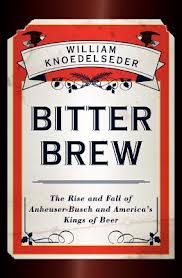
(p. C9) The first King of Beers was a German immigrant who came to America just before the Civil War. Adolphus Busch set down roots in heavily Germanic St. Louis, used an inheritance to buy a brewery-supply business and married into the Anheuser family, which owned a struggling brewery of its own. Installed as president of the family business (re-christened Anheuser-Busch), Adolphus purchased a beer recipe–you have to love this–used by monks in a Bohemian village named Budweis. The crisp, pale lager was known as Budweiser.
. . .
Adolphus certainly knew how to sell beer. He was the first American brewer to pasteurize his product, meaning that he could store it longer and ship it greater distances. He bought his own rail-car company and glass bottler; in the age of trusts he was a one-man conglomerate. Anticipating the family taste for luxury, Adolphus maintained baronial mansions in St. Louis, Cooperstown, N.Y., and Pasadena, Calif. His style was grand or, as Mr. Knoedelseder puts it, “over-the-top gauche.”

For the full review, see:
Roger Lowenstein. “BOOKSHELF; Fall of the House of Busch.” The Wall Street Journal (Sat., December 1, 2012): C9.
(Note: ellipsis added.)
(Note: the online version of the review has the date November 30, 2012.)

Book under review:
Knoedelseder, William. Bitter Brew: The Rise and Fall of Anheuser-Busch and America’s Kings of Beer. New York: HarperBusiness, 2012.

Unemployment Increases Risk of Heart Attack

As a defender of the process of innovation through creative destruction, I try to be alert to evidence on creative destruction’s benefits and costs. The highest cost is usually viewed as technological unemployment. The evidence below will have to be examined and, if sound, added to the costs.

(p. D6) Unemployment increases the risk of heart attack, a new study reports, and repeated job loss raises the odds still more.
. . .
After adjusting for well-established heart attack risks — age, sex, smoking, income, hypertension, cholesterol screening, exercise, depression, diabetes and others — the researchers found that being unemployed also increased the risk of a heart attack, by an average of 35 percent.

For the full story, see:
NICHOLAS BAKALAR. “Job Loss Raises Threat of Heart Attack.” The New York Times (Tues., November 27, 2012): D6.
(Note: ellipsis added.)
(Note: the online version of the story has the date November 26, 2012.)

The Dupre article mentioned above, is:
Dupre, Matthew E., Linda K. George, Guangya Liu, and Eric D. Peterson. “The Cumulative Effect of Unemployment on Risks for Acute Myocardial Infarction.” Archives of Internal Medicine 172, no. 22 (Dec. 10, 2012): 1731-37.
(Note: the Archives of Internal Medicine has been re-named JAMA Internal Medicine.)

Many New Tech Entrepreneurs Shun “Fast Cars and Fancy Parties”

LibinPhilEvernoteCEO2013-03-09.jpg

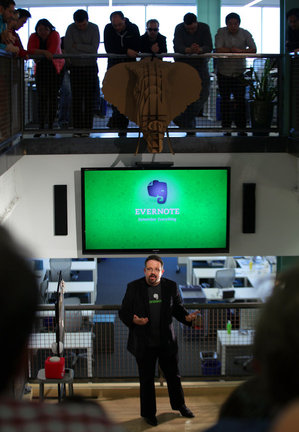
“Phil Libin, chief of Evernote, at its headquarters in Redwood City, Calif.” Source of caption and photo: online version of the NYT article quoted and cited below.

(p. B1) SAN FRANCISCO — The number of privately held Silicon Valley start-ups that are worth more than $1 billion shocks even the executives running those companies.

“I thought we were special,” said Phil Libin, chief executive of Evernote, an online consumer service for storing clippings, photos and bits of information as he counted his $1 billion-plus peers.
He started Evernote in 2008 on the eve of the recession and built it methodically. “A lot of us didn’t set out to have a big valuation, we’re just trying to build something that lasts,” Mr. Libin said. “There is no safe industry anymore, even here.”
. . .
(p. B2) Silicon Valley entrepreneurs contend that the price spiral is not a sign of another tech bubble. The high prices are reasonable, they say, because innovations like smartphones and cloud computing will remake a technology industry that is already worth hundreds of billions of dollars.
. . .
The founders of the highly valued companies are old enough to remember past busts, and many shun the bubble lifestyle of fast cars and fancy parties.
Mr. Libin, who said he grew up on food stamps as the son of Russian immigrants in the Bronx, became a millionaire when he sold his first company, Engine5, to Vignette in 2000.
“The company I sold to, there were purple Lamborghinis in the garage. I got into watches,” he said. “Maybe a half-dozen, nothing over $10,000, but I needed this glass and leather watch winder.”
Evernote started as the financial crisis hit. “One night I was almost busted again,” he said, “and there was that watch winder on the shelf, mocking me.”
“Every job out there is insecure now,” he said. “People sell 10 percent of their stock, and they have an incentive to make the other 90 percent worth more. They are still working, but not worrying about what will happen to their home or their kids.”

For the full story, see:
QUENTIN HARDY. “A Billion-Dollar Club, and Not So Exclusive.” The New York Times (Weds., February 5, 2013): B1 & B2.
(Note: the online version of the story has the date February 4, 2013.)

Real Entrepreneurs Do Not Launch a Startup in Order to Cash In and Move On

The following passage is Steve Jobs speaking, as quoted by Walter Isaacson.
I agree with the part about real entrepreneurs not going public quick in order to cash in. But I disagree that the real entrepreneurs are mainly interested in building a lasting company. I think that often they are mainly interested in getting a project, or a series of projects, done (and done reasonably well). Recall that when Walt Disney couldn’t convince Roy Disney to pursue the Disneyland project, Walt left the main Disney company to pursue the project through a secondary rump Disney company.

(p. 569) I hate it when people call themselves “entrepreneurs” when what they’re really trying to do is launch a startup and then sell or go public, so they can cash in and move on. They’re unwilling to do the work it takes to build a real company, which is the hardest work in business. That’s how you really make a contribution and add to the legacy of those who went before. You build a company that will still stand for something a generation or two from now. That’s what Walt Disney did, and Hewlett and Packard, and the people who built Intel. They created a company to last, not just to make money. That’s what I want Apple to be.

Source:
Isaacson, Walter. Steve Jobs. New York: Simon & Schuster, 2011.