Modern Humans Created Flutes Over 42,000 Years Ago

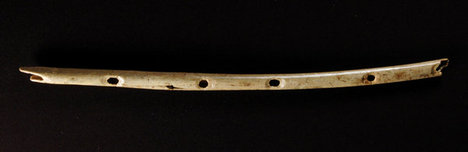
BoneFluteHohleFelsCaveGermany2012-09-03.jpg “LOST AND FOUND; Scientists say that this bone flute, found at Hohle Fels Cave in Germany, is at least 42,000 years old.” Source of caption and photo: online version of the NYT article quoted and cited below.

(p. D4) In hillside caves of southwestern Germany, archaeologists in recent years have uncovered the beginnings of music and art by early modern humans migrating into Europe from Africa. New dating evidence shows that these oldest known musical instruments in the world, flutes made of bird bone and mammoth ivory, are even older than first thought.

Scientists led by Thomas Higham of the University of Oxford in England reported last week that improved radiocarbon tests determined that animal bones found with the flutes were 42,000 to 43,000 years old. This is close to the time when the first anatomically modern humans were spreading into Central Europe, presumably along the Danube River valley.
Earlier tests had yielded dates of 35,000 years ago for artifacts at several caves where flutes and also ivory statuettes of voluptuous women have been found near Ulm, Germany, and the Danube’s headwaters. The best preserved bone flute, with five finger holes, was collected at Hohle Fels Cave. The new analysis was based on material from the nearby Geissenklösterle Cave.

For the full story, see:
JOHN NOBLE WILFORD. “Flute’s Revised Age Dates the Sound of Music Earlier.” The New York Times (Tues., May 29, 2012): D4.

Some of the new results summarized above are reported to the scientific community in:
Higham, Thomas, Laura Basell, Roger Jacobi, Rachel Wooda, Christopher Bronk Ramseya, and Nicholas J. Conardf. “Τesting Models for the Beginnings of the Aurignacian and the Advent of Figurative Art and Music: The Radiocarbon Chronology of Geißenklösterle.” Journal of Human Evolution 62, no. 6 (June 2012): 664-76.
Skilled Immigrants Increase U.S. Patents

(p. 31) We measure the extent to which skilled immigrants increase innovation in the United States. The 2003 National Survey of College Graduates shows that immigrants patent at double the native rate, due to their disproportionately holding science and engineering degrees. Using a 1940-2000 state panel, we show that a 1 percentage point increase in immigrant college graduates’ population share increases patents per capita by 9-18 percent. Our instrument for the change in the skilled immigrant share is based on the 1940 distribution across states of immigrants from various source regions and the subsequent national increase in skilled immigration from these regions.

For the full article, from which the above abstract is quoted, see:
Hunt, Jennifer, and Marjolaine Gauthier-Loiselle. “How Much Does Immigration Boost Innovation?” American Economic Journal: Macroeconomics 2, no. 2 (April 2010): 31-56.

Big Science Done Privately at Great Risk

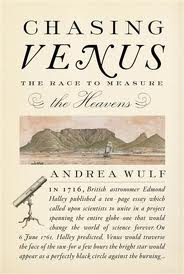
ChasingVenusBK2012-09-01.jpg

Source of book image: http://t0.gstatic.com/images?q=tbn:ANd9GcQPLdrVlC1FT3ojxyxWJLq55AeAs87pw_Bw6ks1ugFnkcI_DBa_1w&t=1

(p. 23) Next time you find yourself grousing when the passenger in front reclines his seat a smidge too far, consider the astronomers of the Enlightenment. In 1761 and 1769, dozens and dozens of stargazers traveled thousands of miserable miles to observe a rare and awesome celestial phenomenon. They went by sailing ship and open dinghy, by carriage, by sledge and on foot. They endured discomfort that in our own flabby century would generate years of litigation. And they did it all for science: the men in powdered wigs and knee britches were determined to measure the transit of Venus.
. . .
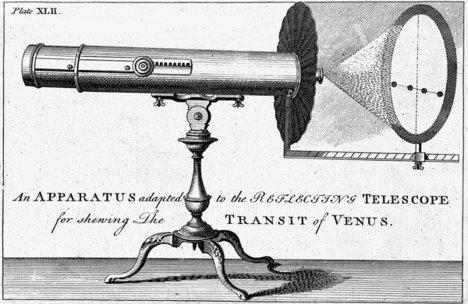
The British astronomer Edmond Halley had realized that precise measurement of a transit might give astronomers armed with a clock and a telescope the data they needed to calculate how far Earth is from the Sun. With that distance in hand, they could work out the actual size of the solar system, the great astronomical problem of the era. The catch was that it would take multiple measurements from carefully chosen locations all over the Northern and Southern Hemispheres. But that was somebody else’s problem. Halley knew he wouldn’t live to see the transit of 1761.
That challenge fell to the French astronomer Joseph-Nicolas Delisle, who managed to energize and rally his colleagues in the years leading up to the transit, then coordinate the enormous effort that would ultimately involve scientists and adventurers from France, Britain, Russia, Germany, the Netherlands, Italy, Sweden and the American colonies. When you think about how hard it is to arrange a simple dinner with a few friends who live in the same city and use the same language when e-mailing, it’s enough to take your breath away.
. . .
Sea travel was so risky in 1761 that observers took separate ships to the same destination to increase the chances some of them would make it alive. The Seven Years’ War was on, and getting caught in the cross-fire was a constant concern. One French scientist carried a passport arranged by the Royal Society in London advising the British military “not to molest his person or Effects upon any account.” Others were shelled by the French or caught in border troubles with the Russians. An observer en route to Tobolsk, in Siberia, found himself floating in ice up to his waist when his carriage fell through the frozen river they were traveling in lieu of a road. He made it to his destination. Another, heading toward eastern Finland via the iced-over Gulf of Bothnia, was repeatedly catapulted out of his sledge as the runners caught on the crests of frozen waves. He made it too.

For the full review, see:
JoANN C. GUTIN. “Masters of the Universe.” The New York Times Book Review (Sun., May 20, 2012): 19.
(Note: ellipses added.)
(Note: the online version of the review has the date May 18, 2012.)

The full reference for the book under review, is:
Wulf, Andrea. Chasing Venus: The Race to Measure the Heavens. New York: Alfred A. Knopf, 2012.

ApparatusTransitVenus2012-09-01.jpg Source of image: online version of the NYT article quoted and cited above.

Kahneman Preaches that People Can and Should Act More Rationally

(p. 338) . . . I have a sermon ready for Sam if he rejects the offer of a single highly favorable gamble played once, and for you if you share his unreason-able aversion to losses:

I sympathize with your aversion to losing any gamble, but it is costing you a lot of money. Please consider this question: Are you on your deathbed? Is this the last offer of a small favorable gamble that you will ever consider? Of course, you are unlikely to be offered exactly this gamble again, but you will have many opportunities to consider attractive gambles with stakes that are very small relative to your wealth. You will do yourself a large financial favor if you are able to see each of these gambles as part of a bundle of small gambles and rehearse the mantra that will get you significantly closer to economic rationality: you win a few, you lose a few. The main purpose of the mantra is to control your emotional response when you do lose. If you can trust it to be effective, you should remind yourself of it when deciding whether or not to accept a small risk with positive expected value. Remember these qualifications when using the mantra:

  • It works when the gambles are genuinely independent of each other; it does not apply to multiple investments in the same industry, which would all go bad together.

(p. 339)

  • It works only when the possible loss does not cause you to worry about your total wealth. If you would take the loss as significant bad news about your economic future, watch it!
  • It should not be applied to long shots, where the probability of winning is very small for each bet.

If you have the emotional discipline that this rule requires, you will never consider a small gamble in isolation or be loss averse for a small gamble until you are actually on your deathbed and not even then.

This advice is not impossible to follow. Experienced traders in financial markets live by it every day, shielding themselves from the pain of losses by broad framing. As was mentioned earlier, we now know that experimental subjects could be almost cured of their loss aversion (in a particular context) by inducing them to “think like a trader,” just as experienced baseball card traders are not as susceptible to the endowment effect as novices are. Students made risky decisions (to accept or reject gambles in which they could lose) under different instructions. In the narrow-framing condition, they were told to “make each decision as if it were the only one” and to accept their emotions. The instructions for broad framing of a decision included the phrases “imagine yourself as a trader,” “you do this all the time,” and “treat it as one of many monetary decisions, which will sum together to produce a ‘portfolio’.” The experimenters assessed the subjects’ emotional response to gains and losses by physiological measures, including changes in the electrical conductance of the skin that are used in lie detection. As expected, broad framing blunted the emotional reaction to losses and increased the willingness to take risks.

Source:
Kahneman, Daniel. Thinking, Fast and Slow. New York: Farrar, Straus and Giroux, 2011.
(Note: ellipsis added; italics in original.)

Global Warming Expands Range of Brown Argus Butterfly

BrownArgusButterfly2012-09-03.jpg “The brown argus butterfly has expanded its range in England.” Source of caption and photo: online version of the NYT article quoted and cited below.

(p. D3) A butterfly species in England is expanding its range, thanks to climate change.

In the current issue of Science, researchers at the University of York report that the brown argus butterfly has spread its reach in England northward by about 50 miles over 20 years as a warmer climate allows its caterpillars to feed off wild geranium plants, which are widespread in the countryside.

For the full story, see:
SINDYA N. BHANOO. “OBSERVATORY; A Butterfly Takes Wing on Climate Change.” The New York Times (Tues., May 29, 2012): D3.
(Note: the online version of the article has the date May 24, 2012.)

The results summarized above are reported to the scientific community in:
Chen, Ching, Jane K. Hill, Ralf Ohlemüller, David B. Roy, and Chris D. Thomas. “Report; Rapid Range Shifts of Species Associated with High Levels of Climate Warming.” Science 333, no. 6045 (August 19, 2011): 1024-1026.

A True Tall Tale: Mankiw Lays a Reductio Ad Absurdum on the Egalitarians

(p. 155) Should the income tax system include a tax credit for short taxpayers and a tax surcharge for tall ones? This paper shows that the standard utilitarian framework for tax policy analysis answers this question in the affirmative. This result has two possible interpretations. One interpretation is that individual attributes correlated with wages, such as height, should be considered more widely for determining tax liabilities. Alternatively, if policies such as a tax on height are rejected, then the standard utilitarian framework must in some way fail to capture our intuitive notions of distributive justice.

For the full article, from which the above abstract is quoted, see:
Mankiw, N. Gregory, and Matthew Weinzierl. “The Optimal Taxation of Height: A Case Study of Utilitarian Income Redistribution.” American Economic Journal: Economic Policy 2, no. 1 (Feb. 2010): 155-76.

How a Group of “Natural Philosophers” Created Science in a London “Full of Thieves, Murderers and Human Waste”

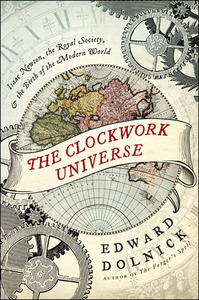
clockworkuniverseBK2012-09-01.jpg

Source of book image: http://www.edwarddolnick.net/images/clockworkuniverse-cover.jpg

(p. 19) London before the mid-1600s was a general calamity. The streets were full of thieves, murderers and human waste. Death was everywhere: doctors were hapless, adults lived to about age 30, children died like flies. In 1665, plague moved into the city, killing sometimes 6,000 people a week. In 1666, an unstoppable fire burned the city to the ground; the bells of St. Paul’s melted. Londoners thought that the terrible voice of God was “roaring in the City,” one witness wrote, and they would do best to accept the horror, calculate their sins, pray for guidance and await retribution.

In the midst of it all, a group of men whose names we still learn in school formed the Royal Society of London for the Improvement of Natural Knowledge. They thought that God, while an unforgiving judge, was also a mathematician. As such, he had organized the universe according to discernible, mathematical law, which, if they tried, they could figure out. They called themselves “natural philosophers,” and their motto was “Nullius in verba”: roughly, take no one’s word for anything. You have an idea? Demonstrate it, do an experiment, prove it. The ideas behind the Royal Society would flower into the Enlightenment, the political, cultural, scientific and educational revolution that gave rise to the modern West.
This little history begins Edward Dolnick’s “Clockwork Universe,” so the reader might think the book is about the Royal Society and its effects. But the Royal Society is dispatched in the first third of the book, and thereafter, the subject is how the attempt to find the mathematics governing the universe played out in the life of Isaac Newton.
. . .
To go from sinful “curiositas” to productive “curiosity,” from blind acceptance to open-eyed inquiry, from asking, “Why?” to answering, “How?” — this change, of all the world’s revolutions, must surely be the most remarkable.

For the full review, see:
ANN FINKBEINER. “Masters of the Universe.” The New York Times Book Review (Sun., March 27, 2011): 19.
(Note: the online version of the review has the date March 25, 2011, and had the title “What Newton Gave Us.”)

The full reference for the book under review, is:
Dolnick, Edward. The Clockwork Universe: Isaac Newton, the Royal Society, and the Birth of the Modern World. New York: HarperCollins Publishers, 2011.

Reference Point Ignored Due to “Theory-Induced Blindness”

(p. 290) The omission of the reference point from the indifference map is a surprising case of theory-induced blindness, because we so often encounter cases in which the reference point obviously matters. In labor negotiations, it is well understood by both sides that the reference point is the existing contract and that the negotiations will focus on mutual demands for concessions relative to that reference point. The role of loss aversion in bargaining is also well understood: making concessions hurts. You have much (p. 291) personal experience of the role of reference point. If you changed jobs or locations, or even considered such a change, you surely remember that the features of the new place were coded as pluses or minuses relative to where you were. You may also have noticed that disadvantages loomed larger than advantages in this evaluation–loss aversion was at work. It is difficult to accept changes for the worse. For example, the minimal wage that unemployed workers would accept for new employment averages 90% of their previous wage, and it drops by less than 10% over a period of one year.

Source:
Kahneman, Daniel. Thinking, Fast and Slow. New York: Farrar, Straus and Giroux, 2011.

The Mockingjay as Symbol and Reality

MockingjayBurningPoster2012-09-03.jpg

A burning Mockingjay symbol appears on this movie poster for “The Hunger Games.” Source of poster: online version of the NYT article quoted and cited below.

(p. D4) “They’re funny birds and something of a slap in the face to the Capitol,” Katniss explains in the first book. And the nature of that slap in face is a new twist on the great fear about genetic engineering, that modified organisms or their genes will escape into the wild and wreak havoc. The mockingjay is just such an unintended consequence, resulting from a failed creation of the government, what Katniss means when she refers to “the Capitol.” But rather than being a disaster, the bird is a much-loved reminder of the limits of totalitarian control.
. . .
I asked Joan Slonczewski, a microbiologist and science fiction writer at Kenyon College in Ohio, about her take on the mockingjay. Dr. Slonczewski, whose recent books include a text and a novel, “The Highest Frontier,” teaches a course called “Biology in Science Fiction.” The tools needed to modify organisms are already widely dispersed in industry and beyond. “Now anybody can do a start-up,” she said.
That’s no exaggeration. Do-it-yourself biology is growing. The technology to copy pieces of DNA can be bought on eBay for a few hundred dollars, as Carl Zimmer reported in The New York Times in March. As to where D.I.Y. biology may lead, Freeman Dyson, a thinker at the Institute for Advanced Study known for his provocative ideas, presented one view in 2007 in The New York Review of Books. He envisioned the tools of biotechnology spreading to everyone, including pet breeders and children, and leading to “an explosion of diversity of new living creatures.”
Eventually, he wrote, the mixing of genes by humans will initiate a new stage in evolution. Along the way, if he is right, the world may have more than its share of do-it-yourself mockingjays.

For the full story, see:
JAMES GORMAN. “SIDE EFFECTS; D.I.Y. Biology, on the Wings of the Mockingjay.” The New York Times (Tues., May 15, 2012): D4.
(Note: ellipsis added.)
(Note: the online version of the article has the date May 10, 2012.)

Macro Policy Should Be Less Interventionist, More Rules-Based, and More Predictable

(p. 165) This article reviews the role of monetary and fiscal policy in the financial crisis and draws lessons for future macroeconomic policy. It shows that policy deviated from what had worked well in the previous two decades by becoming more interventionist, less rules-based, and less predictable. The policy implications are thus that policy should “get back on track.”

For the full article, from which the above abstract is quoted, see:
Taylor, John B. “Getting Back on Track: Macroeconomic Policy Lessons from the Financial Crisis.” Federal Reserve Bank of St. Louis Review 92, no. 3 (May-June 2010): 165-76.

“Science Is Weakest in the Lands of Islam”

HouseOfWisdomBK2012-09-01.jpg

Source of book image: http://photo.goodreads.com/books/1327925578l/10379376.jpg

(p. 18) The upshot was, while the Greek works in particular were disappearing in Europe, they were being preserved in Arabic to be retranslated later into Latin for a rebirth of “lost” knowledge. This is one half of the point the author makes frequently in the text and, in boldface, as the book’s subtitle.

The other half is that contrary to some doubters, the Arab interest in learning extended well beyond translations: thinkers working alone or in observatories and houses of wisdom were conducting original research during “the world’s most impressive period of scholarship and learning since ancient Greece.” Accordingly, al-Khalili writes that ­al-Mamun stands as “the greatest patron of science in the cavalcade of Islamic rulers.”
Sometimes al-Khalili, like a lawyer who suspects a jury of unyielding skepticism, strains to give stature to the leading lights of Arabic science in the Middle Ages. But modern historians of science agree that more attention should be given to the Arab contribution to the preservation and expansion of knowledge at this critical period, and the author has done so in considerable detail and with rising passion.
But that was then, and al-Khalili is obligated to end on an inescapable but deflating note: science today is in a chronic state of neglect in the Arab world and the broader Islamic culture of more than one billion people. Al-Khalili spreads the blame widely, citing inadequate financing for research and education, sclerotic bureaucracies, religious conservatism, even an ingrained fear of science. The Pakistani physicist Abdus Salam, perhaps the greatest Muslim scientist of the last century, won a Nobel Prize in 1979 and did what he could to promote a scientific renaissance among his people, without success. “Of all civilizations on this planet, science is weakest in the lands of Islam,” Salam said in despair. “The dangers of this weakness cannot be overemphasized since the honorable survival of a society depends directly on its science and technology in the condition of the present age.”
By recounting Arabic science’s luminous past, al-Khalili says, he hopes to instill a sense of pride that will “propel the importance of scientific enquiry back to where it belongs: at the very heart of what defines a civilized and enlightened society.”

For the full review, see:
JOHN NOBLE WILFORD. “The Muslim Art of Science.” The New York Times Book Review (Sun., May 22, 2011): 18.
(Note: the online version of the review has the date May 20, 2011.)

The full reference for the book under review, is:
al-Khalili, Jim. The House of Wisdom: How Arabic Science Saved Ancient Knowledge and Gave Us the Renaissance. New York: The Penguin Press, 2010.