Energy Department Wastes Energy

(p. A17) WASHINGTON — Like flossing or losing weight, saving energy is easier to promise than to actually do — even if you are the Department of Energy.

Its Web site advises that choosing new lighting technologies can slash energy use by 50 to 75 percent. But the department is having trouble taking its own advice, according to an internal audit released on Wednesday; many of its offices are still installing obsolete fluorescent bulbs.
And very few have switched to the most promising technology, light-emitting diodes, which the department spent millions of dollars to help commercialize.
Many of the changes would generate savings that would pay back the investment in two years or so, according to the report, by the department’s inspector general.
In one case, the Department of Energy made most of the investment by installing timers to shut off lights at night when it moved into a new building in 1997. But it got no benefit: as of March of this year, it had not bought the central control unit needed to run the system.

For the full story, see:
MATTHEW L. WALD. “Energy Department: Make Thyself Fuel Efficient.” The New York Times (Thurs., July 8, 2010): A17.
(Note: the online version of the article is dated July 7, 2010, and has the title “Energy Department Lags in Saving Energy.”)

Districts with More Government Pork Have Less Private Hiring

(p. A19) You can’t read models, but you do talk to entrepreneurs in Racine and Yakima. Higher deficits will make them more insecure and more risk-averse, not less. They’re afraid of a fiscal crisis. They’re afraid of future tax increases. They don’t believe government-stimulated growth is real and lasting. Maybe they are wrong to feel this way, but they do. And they are the ones who invest and hire, not the theorists.

The Demand Siders are brilliant, but they write as if changing fiscal policy were as easy as adjusting the knob on your stove. In fact, it’s very hard to get money out the door and impossible to do it quickly. It’s hard to find worthwhile programs to pour money into. Once programs exist, it’s nearly impossible to kill them. Spending now creates debt forever and ever.
Moreover, public spending seems to have odd knock-off effects. Professors Lauren Cohen, Joshua Coval and Christopher Malloy of Harvard surveyed 42 years of government spending increases in certain Congressional districts. They found that federal spending increases dampened corporate hiring and investment in those districts.

For the full commentary, see:

DAVID BROOKS. “A Little Economic Realism.” The New York Times (Tues., July 6, 2010): A19.
(Note: the online version of the article is dated July 5, 2010.)

The research referenced is:
Cohen, Lauren, Joshua D. Coval, and Christopher J. Malloy. “Do Powerful Politicians Cause Corporate Downsizing?” NBER Working Paper No.15839, March 2010.

Cuban Health Care Checkup

(p. A17) . . . it’s a good time to check in on the state of the Cuban health-care system. That’s just what Laurie Garrett, a senior fellow at the Council on Foreign Relations, does in the current issue of Foreign Affairs magazine.
. . .
Slightly more than half of all Cuban physicians work overseas; taxed by the Cuban state at a 66% rate, many of them wind up defecting. Doctors who remain in the country earn about $25 a month. As a result, Ms. Garrett writes, they often take “jobs as taxi drivers or in hotels,” where they can make better money. As for the quality of the doctors, she notes that very few of those who manage to reach the U.S. can gain accreditation here, partly because of the language barrier, partly because of the “stark differences” in medical training. Typically, they wind up working as nurses.
As for the quality of medical treatment in Cuba, Ms. Garrett reports that hospital patients must arrive with their own syringes, towels and bed sheets. Women avoid gynecological exams “because they fear infection from unhygienic equipment and practices.” Rates of cervical cancer have doubled in the past 25 years as the use of Pap tests has fallen by 30%.
And while Cuba’s admirers love to advertise the country’s low infant mortality rate (at least according to the Castro regime’s dubious self-reporting) the flip-side has been a high rate of maternal mortality. “Most deaths,” Ms. Garrett writes, “occur during delivery or within the next 48 hours and are caused by uterine hemorrhage or postpartum sepsis.”

For the full commentary, see:
BRET STEPHENS. “Dr. Berwick and That Fabulous Cuban Health Care; The death march of progressive medicine.” The Wall Street Journal (Sat., JULY 13, 2010): A17.
(Note: ellipses added.)

Reference to the Garrett article:
Garrett, Laurie A. “Castrocare in Crisis; Will Lifting the Embargo Make Things Worse?” Foreign Affairs 89, no. 4 (July/August 2010): 61-73.

Government Protects Us from Julie Murphy’s Lemonade Stand

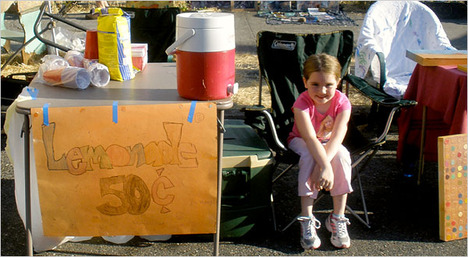
JulieMurphyLemonadeStand2010-08-16.jpgJulie Murphy and her lemonade stand. Source of photo: online version of the NYT article quoted and cited below.

(p. A8) When life gives you lemons, make lemonade.

When health inspectors cite you for it, get famous.
Julie Murphy, a 7-year-old Oregonian, set up a lemonade stand on July 29 at an art fair in northeast Portland. County health inspectors shut her down, however, telling Julie and her mother, Maria Fife, that they needed a temporary restaurant license, which costs $120. The penalty for selling food without a permit, they warned, was $500. At 50 cents a cup, that’s a lot of lemonade.
Others at the fair urged the family to give away the lemonade, and they wrote “free” and “suggested donation” on Julie’s sign with a marker. But the inspectors were unmoved.
Julie left the fair in tears.

For the full story, see:
JOHN SCHWARTZ. “Sorry, Kid: No License, No Lemonade.” The New York Times (Sat., August 7, 2010): A8.
(Note: the online version of the article is dated August 6, 2010.)

“The Survival of Freedom and Accountable, Limited Government Is an Enormously Important Value”

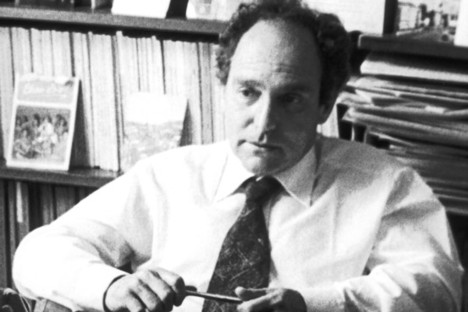
GellnerErnest2010-08-05.jpg “Ernest Gellner in his office at the London School of Economics in 1979.” Source of caption and photo: online version of the WSJ article quoted and cited below.

(p. W8) ‘I am sorry, I have written another,” Ernest Gellner used to say in his later years before publishing a new book. “I just couldn’t help it.” Not even his death in 1995 stopped the flow. The last of his posthumous works, “Language and Solitude,” appeared in the late 1990s. Now Gellner has been brought back to life–alongside his combative ideas and his maverick approach to intellectual combat–in a sympathetic but by no means reverential biography by his former pupil John A. Hall.
. . .
Many of the problems that Gellner addressed during his long intellectual career–such as the roots of nationalism and the role of contemporary Islam–are obviously of direct relevance today. But the most pertinent part of his legacy lies in his fearless endorsement of Western modernity at a time when it was becoming increasingly embattled in the academy and elsewhere.
As Mr. Hall demonstrates, Gellner believed that there really was a clash between “liberty and pluralism,” on the one hand, and “authoritarianism and oppressiveness” on the other. In a passionate riposte to Noam Chomsky, who had accused him of ignoring Western crimes, Gellner charged that his critic had “obscured” the fact that “the survival of freedom and accountable, limited government is an enormously important value even when some of its defenders are occasionally tarnished.”
This was the authentic voice of Ernest Gellner: honest, cool and reasonable. Mr. Hall is to be congratulated for reminding us of how much we miss it today.

For the full review, see:
BRENDAN SIMMS. “A Combatant in the Battle of Ideas; A defender of the West when it was most embattled, a defender of reason at a time of dangerous irrationality.” The Wall Street Journal (Fri., JULY 23, 2010): W8.
(Note: the online version of the article is dated July 30 (sic), 2010.)
(Note: ellipsis added.)

The book under review, is:
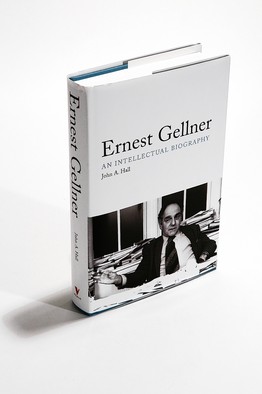
Hall, John A. Ernest Gellner: An Intellectual Biography. London, UK: Verso, 2010.

ErnestGellnerBK.jpg

Source of book image: online version of the WSJ review quoted and cited above.

“Pork Actually Pushes Private Investment Out of a State”

Some West Virginia miners may have faced unemployment due to technological progress. But what they needed to improve their situation was economic growth from private enterprise, rather than Senator Robert Byrd’s federal pork.

(p. A11) . . . mining companies developed more efficient techniques for extracting coal and natural gas, which eliminated the need for many blue collar jobs. Laid-off workers lacked the skills to attract other types of businesses and college students couldn’t find jobs after graduation, so they left. Such dramatic changes would be serious obstacles for any politician.

. . .
By contrast, Byrd’s solution was to steer federal largess to his state.
. . .
Take Route 50. Thirty years ago, the federal government extended the route from two lanes to four with the hopes of spurring development. But hit the open road today and you’ll notice it’s just that–open. “You won’t see another car for two hours,” says Russell Sobel, a professor of economics at West Virginia University. “You can’t just build roads and expect that things will happen. People who want to transport goods and services need to be there.”
. . .
“We’ve created this culture of dependency,” warns Mr. Sobel, “Our human capital is not good at competing in the marketplace; it’s good at securing federal grants.”
Federal funding is a shaky foundation for an economy because no one can replace Big Daddy. In their recently released paper “Do Powerful Politicians Cause Corporate Downsizing?” Harvard professors Lauren Cohen, Joshua Coval and Christopher Malloy found that states that lose chairmanships on important congressional committees lose 20% to 30% in earmarks.
Even worse, they found that pork actually pushes private investment out of a state. When the federal government intrudes, it raises demand for the state’s workers and real estate, jacking up prices. Often, companies can’t compete, so they flee.

For the full commentary, see:
BRIAN BOLDUC. “CROSS COUNTRY; Robert Byrd’s Highways to Nowhere; Government pork hasn’t made West Virginia prosperous.” The Wall Street Journal (Sat., JULY 10, 2010): A11.
(Note: ellipses added.)

The research referenced is:
Cohen, Lauren, Joshua D. Coval, and Christopher J. Malloy. “Do Powerful Politicians Cause Corporate Downsizing?” NBER Working Paper No.15839, March 2010.

Feds’ Sugar Quotas Lead to More Demand for Obesity-Causing Corn Syrup

CornSyrupGraph2010-08-05.jpgSource of graph: online version of the Omaha World-Herald article quoted and cited below.

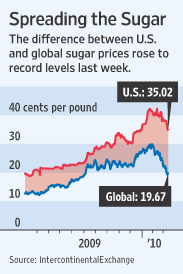
The federal government puts quotas on the amount of sugar that can be imported from abroad, with the result that U.S. consumers pay higher prices for sugar. One result, as taught in economics micro principles courses, is that demand increases for sugar substitutes, such as corn syrup.
Evidence is accumulating (see below) that corn syrup is worse for our health than sugar.
Michelle Obama is leading a drive to reduce obesity. If she is serious, she can begin by asking her husband to ask his congress to remove import quotas on sugar.

(p. 2A) Well-publicized research also has suggested that high fructose corn syrup poses an even greater threat of obesity and other health problems than regular table sugar.
. . .
Researchers at Princeton University made headlines earlier this year when they released the results of a study that found rats drinking a high fructose corn syrup beverage for six months showed abnormal weight gain and other factors indicating obesity. The study concluded that overconsumption of the sweetener “could very well be a major factor in the ‘obesity epidemic,’ which correlates with the upsurge in the use of HFCS.”
A related study found that rats drinking the high fructose corn syrup solution gained more weight than rats drinking a basic sucrose solution.
“The conclusion from that is that high fructose corn syrup and sucrose are not the same after all,” said Bart Hoebel, the professor who worked on the study.

For the full story, see:

Ross Boettcher and Joseph Morton. “Is Corn Syrup Slump Healthy? ConAgra, Farmers Divided.” Omaha World-Herald (Wednesday, July 26, 2010): 1A-2A.

(Note: ellipsis added.)
(Note: the online version of the article is dated July 26, 2010 and has the title “Consumers sour on sugars.)

“Intimidation, Threats and Violence Against the White Farmers” in Zimbabwe

ForcingWhiteFarmerOffLand2010-08-04.jpg“A man tries to force a white Zimbabwean farmer off of his land in “Mugabe and the White African.”” Source of caption and photo: online version of the NYT article quoted and cited below.

(p. C9) Lucy Bailey and Andrew Thompson’s “Mugabe and the White African” is a documentary account of the efforts of Mike Campbell and his son-in-law, Ben Freeth, to hold onto their farm. It tracks their precedent-setting lawsuit against Robert Mugabe, the authoritarian Zimbabwean president, in a regional African court, as well as events on the ground in Zimbabwe: intimidation, threats and violence against the white farmers still holding out after a decade of land seizures by the government.

Many viewers will leave “Mugabe and the White African” thinking that they have seen few, if any, documentaries as wrenching, sad and infuriating, and those feelings will be justified. What has happened (and continues to happen) to the Campbells, the Freeths and some of their white neighbors is not only unjust but also a horrifying, slow-motion nightmare. That sensation is reinforced by the movie’s political-thriller style, partly a result of the covert filming methods necessary in a country where practicing journalism can get you thrown in jail.

For the full movie review, see:

MIKE HALE. “Fighting His Country to Keep His Farmland.” The New York Times (Fri., July 23, 2010): C9.

(Note: the online version of the article is dated July 22, 2010.)

We’re from the Government, and We Are Here to Help

In February, I heard a wonderful presentation by Emily Chamlee-Wright on the recovery process from Hurricane Katrina. One of my favorite parts of her presentation was an account of how the federal bureaucracy hindered those whose entrepreneurship was needed for recovery. The account is included in her book The Cultural and Political Economy of Recovery, that documents her research on Katrina:

(p. 142) . . . , the bureaucratic structure governing disaster relief can stifle, or at the very least frustrate local leadership driving community redevelopment. Doris Voitier’s efforts to re-open the public school system in St. Bernard Parish illustrate this point. Voitier had initially assumed that FEMA’s newly created task force on education would lend the support and expertise she needed. But she quickly learned that FEMA’s role was not so much to lend support as it was to regulate the decisions coming out of her office.

VOITIER: [W]e had our kickoff meeting in September. We didn’t even know what a kickoff meeting was nor did we know we were in one until after it was over . . . . In their little book, which I read later, they tell them, “meet in the person’s home territory,” basically. Now . . . we were operating out of Baton Rouge, and so were all of the people who attended this meeting. We all got rental cars and drove down [to St. Bernard Parish] and met on the third floor of the building over by Chalmette Refining at 2 o’clock in the afternoon in 100 degree heat with no air conditioning or anything. [M]y assistant superintendent and I walk into this meeting and there were 27 people in this meeting are sitting around this table . . . and we were going through the introductions. And the first two people said, “We’re so and so. We are the FEMA historical restoration team” I said, okay, tell me what you do. “Well, we make sure any buildings that are 40 years old or more, they’re designated a historical building, we make sure all of the rules and regulations are followed for that or if there are any historical documents, paintings, or whatever, that they’re preserved properly, and that you do (p. 143) everything you’re supposed to do . . . .” Now here we are just trying to, you know, trying to recover, not worrying too much about that sort of stuff, but . . . thank you very much. So the next two introduced themselves and I said, “Well who are you?” “We are the FEMA environmental protection team.” I said, “Tell me what you do.” Well, same thing. “We make sure all of the environmental laws are followed, that if there are any endangered species that they’re protected,” you know, yadda, yadda, yadda. Okay. The next two, “We are the FEMA 404 mitigation team.” I’m looking at them and I’m thinking, what in the heck is 404 mitigation? Because the next two were the FEMA 406 . . . . So I’m looking at them, I’m thinking, I don’t know what 404 was and I certainly don’t know what 406 is . . . . And you know. . . [I’m thinking] can’t somebody help me get a school started and clean my schools . . . ?

Source:
Chamlee-Wright, Emily. The Cultural and Political Economy of Recovery: Social Learning in a Post-Disaster Environment, Routledge Advances in Heterodox Economics. London: Routledge, 2010.
(Note: first ellipsis added; other ellipses in original.)

Obama Mentor Saul Alinsky on Chicago Reform Candidates

(p. A15) When Barack Obama came to prominence as a presidential candidate, his Chicago background–in particular, his efforts as a “community organizer”–reignited an interest in Saul Alinsky (1909-72), the hard-charging activist whose 1971 book, “Rules for Radicals,” was said to have had a formative influence on Mr. Obama’s thinking.
. . .
Hardscrabble though his youth had been, Alinsky managed to get into the University of Chicago, where his major was archaeology. When the Depression dried up money for digs, he wangled a fellowship to study criminology and began hanging out with gangsters as part of his study, including Al Capone’s “enforcer,” Frank Nitti.
Mr. von Hoffman tells us that one of Alinsky’s favorite stories involved a meeting between Nitti and Anton Cermak just after Cermak had been elected Chicago’s mayor in 1931. The meeting’s purpose was to negotiate the money that Capone would pay the city to keep its speakeasies stocked with beer and liquor: “As Saul told the story,” Mr. von Hoffman writes, “Cermak explained to Nitti, ‘You know I was elected as a reform candidate.’ To which Nitti replied, ‘What the hell does that mean, Tony?’ and waited for an answer. ‘It means,’ the mayor said after a suitable pause, ‘that the price is double.’ ”
The anecdote nicely illustrates the cynicism that informed Alinsky’s ideas about the way the world works.

For the full review, see:
CHRISTOPHER WILLCOX. “A Chicago-Style Peace Disturber; ‘Community organizer’ Saul Alinsky lumped politicians in with gangsters..” The Wall Street Journal (Thurs., July 15, 2010): A15.
(Note: ellipsis added.)

The book under review is:
von Hoffman, Nicholas. Radical: A Portrait of Saul Alinsky. New York: Nation Books, 2010.

Jefferson “Was Experimental and Had a Lot of Failures”

JeffersonianGardeningA2010-07-12.jpg“In the vegetable garden at Monticello, his home in Virginia, Thomas Jefferson sowed seeds from around the world and shared them with farmers. He was not afraid of failure, which happened often.” Source of caption and photo: online version of the NYT article quoted and cited below.

Steven Johnson has written an intriguing argument that the intellectual foundation of the founding fathers was based as much on experimental science as on religion. The article quoted below provides a small bit of additional evidence in support of Johnson’s argument.

(p. D1) NEW gardeners smitten with the experience of growing their own food — amazed at the miracle of harvesting figs on a Brooklyn rooftop, horrified by the flea beetles devouring the eggplants — might be both inspired and comforted by the highs and lows recorded by Thomas Jefferson from the sun-baked terraces of his two-acre kitchen garden 200 years ago.

And they could learn a thing or two from the 19th-century techniques still being used at Monticello today.
“He was experimental and had a lot of failures,” Peter Hatch, the director of gardens and grounds, said on a recent afternoon, as we stood under a scorching sun in the terraced garden that took seven slaves three years to cut into the hill. “But Jefferson always believed that ‘the failure of one thing is repaired by the success of another.’ ”
After he left the White House in 1809 and moved to Monticello, his Palladian estate here, Jefferson grew 170 varieties of fruits and 330 varieties of vegetables and herbs, until his death in 1826.
As we walked along the geometric beds — many of them planted in an ancient Roman quincunx pattern — I made notes on the beautiful crops I had never grown. Sea kale, with its great, ruffled blue-green leaves, now full of little round seed pods. Egyptian onions, whose tall green stalks bore quirky hats of tiny seeds and wavy green sprouts. A pre-Columbian tomato called Purple Calabash, whose energetic vines would soon be trained up a cedar trellis made of posts cut from the woods.
“Purple Calabash is one of my favorites,” Mr. Hatch said. “It’s an acidic, al-(p. D7)most black tomato, with a convoluted, heavily lobed shape.”
Mr. Hatch, who has directed the restoration of the gardens here since 1979, has pored over Jefferson’s garden notes and correspondence. He has distilled that knowledge in “Thomas Jefferson’s Revolutionary Garden,” to be published by Yale University Press.

For the full story, see:
ANNE RAVER. “A Revolutionary With Seeds, Too.” The New York Times (Thurs., July 1, 2010): D1 & D7.
(Note: the online version of the article is dated June 30, 2010 and has the title “In the Garden; At Monticello, Jefferson’s Methods Endure.”)