American Innovators Created Synergies and Interchangeable Parts

TheDawnOfInnovationBK2012-11-20.jpg

Source of book image: online version of the WSJ review quoted and cited below.

(p. A13) . . . the post-Civil War industrialization had an important and largely overlooked predecessor in the first decades of the 19th century, when, as Charles Morris writes in “The Dawn of Innovation,” “the American penchant for mechanized, large-scale production spread throughout industry, presaging the world’s first mass-consumption economy.” It is a story well worth telling, and Mr. Morris tells it well.
. . .
Whole industries sprang up as the country’s population boomed and spilled over into the Middle West. The rich agricultural lands there produced huge surpluses of grain and meat, especially pork. The city of Cincinnati–whose population grew to 160,000 in 1860, from 2,500 in 1810–became known as “Porkopolis” because of the number of hogs its slaughterhouses processed annually.
Mr. Morris does a particularly good job of explaining the crucial importance of synergy in economic development, how one development leads to another and to increased growth. The lard (or pig fat) from the slaughterhouses, he notes, served as the basis for the country’s first chemical industry. Lard had always been used for more than pie crust and frying. It was a principal ingredient in soap, which farm wives made themselves, a disagreeable and even dangerous task thanks to the lye used in the process.
But when lard processing was industrialized to make soap, it led to an array of byproducts such as glycerin, used in tanning and in pharmaceuticals. Stearine, another byproduct, made superior candles. Just in the decade from the mid-1840s to the mid-1850s, Cincinnati soap exports increased 20-fold, as did the export of other lard-based products. Procter & Gamble, founded in Cincinnati in 1837 by an Irish soap maker and an English candle maker who had married sisters, grew into a giant company as the fast-rising middle class sought gentility.
Mr. Morris goes into great detail on the development of interchangeable parts–the system of making the components of a manufactured product so nearly identical that they can be easily substituted and replaced.

For the full review, see:
John Steele Gordon. “BOOKSHELF; The Days Of Porkopolis.” The Wall Street Journal (Tues., November 20, 2012): A13.
(Note: ellipses added.)
(Note: the online version of the article was updated November 19, 2012.)

The book under review, is:
Morris, Charles R. The Dawn of Innovation: The First American Industrial Revolution. Philadelphia, PA: PublicAffairs, 2012.

Progress Will Slow If Consumers Wait for Doctors to Creatively Destroy Medicine

(p. 195) . . . it remains unclear whether there is adequate plasticity of a plurality of physicians to embrace the digital world and acknowledge that the era of paternalism is passé. My sense is that young physicians who are digital natives will be likely to assimilate but that it will be quite difficult for the vast majority who are in practice and inculcated with an older idea of how medical care should be rendered. Eventually there will be enough digital native physicians to take charge, but that will take decades to be accomplished. In the meantime, consumers are fully capable of leading the movement and contributing to medicine’s creative destruction. And so they must.

Source:
Topol, Eric. The Creative Destruction of Medicine: How the Digital Revolution Will Create Better Health Care. New York: Basic Books, 2012.
(Note: ellipsis added.)

Sweden Prospers from Low Taxes, No Stimulus and Fiscal Discipline

SwedenGraphGDP2012-11-20.jpg

Source of graph: online version of the WSJ article quoted and cited below.

(p. A9) STOCKHOLM–Sweden’s economy, bolstered by solid exports and healthy consumer spending, is picking up considerable steam even as many of its European neighbors gasp for breath amid the struggle to contain the euro-zone debt crisis.

Sweden’s second-quarter economic output data, released Monday, significantly outpaced expectations, further solidifying the Northern European country’s reputation as a haven in a volatile period. The Swedish krona, which recently reached a 12-year peak against the euro, strengthened further after the report.
. . .
. . . , Sweden has built a reputation for fiscal discipline since it suffered a financial crisis in the early 1990s. Successive governments have since stuck to a target to post a surplus of 1% of GDP over any business cycle.
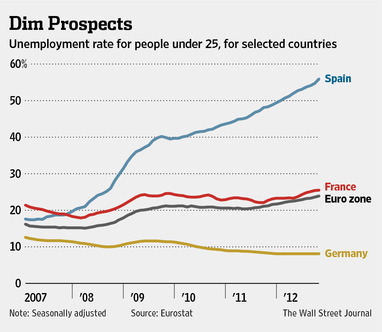
Lawmakers resisted the temptation to borrow to fuel growth during the boom of the early 2000s, which meant Sweden hit the global financial crisis of 2008 and 2009 with strong public finances. The government hasn’t needed to increase taxes in the way Spain has, or to cut spending as in the U.K.

For the full story, see:
CHARLES DUXBURY. “In Crisis, a Rare Swede Spot.” The Wall Street Journal (Tues., July 31, 2012): A9.
(Note: ellipses added.)
(Note: the online version of the article was dated July 30, 2012.)

Econometrician Leamer Argues for Methodological Pluralism

(p. 44) Ignorance is a formidable foe, and to have hope of even modest victories, we economists need to use every resource and every weapon we can muster, including thought experiments (theory), and the analysis of data from nonexperiments, accidental experiments, and designed experiments. We should be celebrating the small genuine victories of the economists who use their tools most effectively, and we should dial back our adoration of those who can carry the biggest and brightest and least-understood weapons. We would benefit from some serious humility, and from burning our “Mission Accomplished” banners. It’s never gonna happen.

Source:
Leamer, Edward E. “Tantalus on the Road to Asymptopia.” Journal of Economic Perspectives 24, no. 2 (Spring 2010): 31-46.

“Highly Leveraged Economies, . . . , Seldom Survive”

ThisTimeIsDifferentBK2012-11-14.jpg

Source of book image: http://si.wsj.net/public/resources/images/ED-AK313_book10_DV_20091008170122.jpg

(p. 762) Every once in a while, a work comes along whose key points ought to be part of the information set of every literate economist. Carmen M. Reinhart and Kenneth S. Rogoff’s This Time is Different: Eight Centuries of Financial Folly is such a work. It describes and analyzes a long international history of several types of financial crises.
. . .
The authors resist giving too much structural interpretation to their analysis. Most would agree with their conclusion that ” . . . highly leveraged economies, particularly those in which continual rollover of short-term debt is sustained only by confidence in relatively illiquid underlying assets, seldom survive” (p. 292).

For the full review, see:
Boskin, Michael J. “Review of: This Time Is Different: Eight Centuries of Financial Folly.” Journal of Economic Literature 48, no. 3 (September 2010): 762-66.
(Note: ellipsis internal to the final quotation, and the italics, are in the original; ellipsis between paragraphs is added.)
(Note: the “p. 292” refers to a page in the book, and not a page of the review.)(

The book being reviewed, is:
Reinhart, Carmen M., and Kenneth Rogoff. This Time Is Different: Eight Centuries of Financial Folly. Princeton, NJ: Princeton University Press, 2009.

Sclerotic Doctors Resist Change

(p. 177) Atherosclerosis, referring to a progressive and degenerative process of artery walls, is typically translated for a lay audience as “hardening of the arteries.” We’ve never needed a similar word to describe the medical community. It came with sclerosis built in. Of all the professions represented on the planet, perhaps none is more resistant to change than physicians. If there were ever a group defined by lacking plasticity, it would first apply to doctors.
(p. 178) The inherent “hardness” of physicians and the medical community suggests they will have a difficult time adapting to the digital world. Before the emergence of the Internet, physicians were high priests, holding all the knowledge and expertise, not to be challenged or questioned by the lowly consumer patient. “Doctor knows best” was the pervasive sentiment, shared by patients and especially physicians.

Source:
Topol, Eric. The Creative Destruction of Medicine: How the Digital Revolution Will Create Better Health Care. New York: Basic Books, 2012.

71,000 Years Ago “These People Were Like You & I”

PinnaclePointExcavation2012-11-16.jpg “Scientists at the Pinnacle Point excavation.” Source of caption and photo: online version of the WSJ article quoted and cited below.

(p. A3) A trove of sophisticated stone tools recently dug up from a South African cliff suggests early modern humans developed complex cognitive ability anywhere from 6,000 to 10,000 years earlier than many scientists believe.

In a study published in the journal Nature, researchers said they had unearthed a large number of small stone blades going back some 71,000 years. The heat-treated blades appear to have been designed for tipping spears or arrows that could be used for hunting game.
Crucially, the discovery indicates that these ancestors had the cognitive ability to manipulate complex tools. In addition, they were able to pass on their inventions to future generations. That, in turn, suggests the use of sophisticated language.
“What it’s showing us is that these people were like you and I,” said Curtis Marean, a paleoanthropologist at Arizona State University in Tempe, Ariz., co-author of the study, and leader of the South Africa project. “They were smart people.”
. . .
Dr. Marean and his colleagues unearthed the microliths at a site known as Pinnacle Point on the southern shore of South Africa. They began the dig in 2005.
Some 72,000 years ago, the earth was wrapped in a glacial chill that lasted about 12,000 years. The African interior was dry and many early modern humans would have moved to more hospitable locations, such as the southern coast.

For the full story, see:
GAUTAM NAIK. “U.S. NEWS (sic); Tool Clue to Early Man’s Mind.” The Wall Street Journal (Thur., November 8, 2012): A3.
(Note: ellipsis added.)
(Note: the online version of the article was updated August 22, 2012 and had the title “WORLD NEWS; Tools Hint at Earlier Start for Human Smarts.)

MicrolithBlades2012-11-16.jpg

“Microlith blades.” Source of caption and photo: online version of the WSJ article quoted and cited above.

Econometric “Priests” Sell Their New “Gimmicks” as the “Latest Euphoria Drug”

The American Economic Association’s Journal of Economic Perspectives published a symposium focused on the thought-provoking views of the distinguished econometrician Edward Leamer.
I quote below some of Leamer’s comments in his own contribution to the symposium.

(p. 31) We economists trudge relentlessly toward Asymptopia, where data are unlimited and estimates are consistent, where the laws of large numbers apply perfectly and where the full intricacies of the economy are completely revealed. But it’s a frustrating journey, since, no matter how far we travel, Asymptopia remains infinitely far
away. Worst of all, when we feel pumped up with our progress, a tectonic shift can occur, like the Panic of 2008, making it seem as though our long journey has left us disappointingly close to the State of Complete Ignorance whence we began.

The pointlessness of much of our daily activity makes us receptive when the Priests of our tribe ring the bells and announce a shortened path to Asymptopia. (Remember the Cowles Foundation offering asymptotic properties of simultaneous equations estimates and structural parameters?) We may listen, but we don’t hear, when the Priests warn that the new direction is only for those with Faith, those with complete belief in the Assumptions of the Path. It often takes years down the Path, but sooner or later, someone articulates the concerns that gnaw away in each of (p. 32) us and asks if the Assumptions are valid. (T. C. Liu (1960) and Christopher Sims (1980) were the ones who proclaimed that the Cowles Emperor had no clothes.) Small seeds of doubt in each of us inevitably turn to despair and we abandon that direction and seek another.
Two of the latest products-to-end-all-suffering are nonparametric estimation and consistent standard errors, which promise results without assumptions, as if we were already in Asymptopia where data are so plentiful that no assumptions are needed. But like procedures that rely explicitly on assumptions, these new methods work well in the circumstances in which explicit or hidden assumptions hold tolerably well and poorly otherwise. By disguising the assumptions on which nonparametric methods and consistent standard errors rely, the purveyors of these methods have made it impossible to have an intelligible conversation about the circumstances in which their gimmicks do not work well and ought not to be used. As for me, I prefer to carry parameters on my journey so I know where I am and where I am going, not travel stoned on the latest euphoria drug.
This is a story of Tantalus, grasping for knowledge that remains always beyond reach. In Greek mythology Tantalus was favored among all mortals by being asked to dine with the gods. But he misbehaved–some say by trying to take divine food back to the mortals, some say by inviting the gods to a dinner for which Tantalus boiled his son and served him as the main dish. Whatever the etiquette faux pas, Tantalus was punished by being immersed up to his neck in water. When he bowed his head to drink, the water drained away, and when he stretched up to eat the fruit hanging above him, wind would blow it out of reach. It would be much healthier for all of us if we could accept our fate, recognize that perfect knowledge will be forever beyond our reach and find happiness with what we have. If we stopped grasping for the apple of Asymptopia, we would discover that our pool of Tantalus is full of small but enjoyable insights and wisdom.

For the full article, see:
Leamer, Edward E. “Tantalus on the Road to Asymptopia.” Journal of Economic Perspectives 24, no. 2 (Spring 2010): 31-46.

“The Bulk of New Yorkers Do Not Have an Unlimited Appetite for Growing Their Own Kale”

McPhersonEnaUrbanGardener2012-11-11.jpg

“. . . , Ena K. McPherson holds the key to three different community gardens.” Source of caption and photo: online version of the NYT article quoted and cited below.

(p. D1) There is some evidence, . . . , that the bulk of New Yorkers do not have an unlimited appetite for growing their own kale. Official counts of New York gardens are fragmentary. But John Ameroso, the Johnny Appleseed of the New York community garden movement, suspects that the number of present-day gardens — around 800 — may be half what it was in the mid-1980s.

In his long career as an urban extension agent for Cornell University, Mr. Ameroso, 67, kept a log with ratings of all the plots he visited. “I remember that there were a lot of gardens that were not in use or minimally used,” he said. “Into the later ’80s, a lot of these disappeared or were abandoned. Or maybe there was one person working them. If nothing was developed on them, they just got overgrown.”
The truth, Ms. Stone said, is that at any giv-(p. D6)en time, perhaps 10 percent of the city’s current stock of almost 600 registered GreenThumb gardens is growing mostly weeds. “In East New York, I can tell you that there are basically many gardens that are barely functioning now.”
. . .
An honest census would reveal that many gardens (perhaps most) depend on just one or two tireless souls, said Ena K. McPherson, a Brooklyn garden organizer. She would know because she’s one of them.
Ms. McPherson holds the keys to three community gardens in Bedford-Stuyvesant. (Ms. Stone appreciatively refers to these blocks as “the Greater Ena McPherson Zone.”) And she serves on the operations committee for the nonprofit Brooklyn Queens Land Trust, which holds the deeds to 32 garden plots.
“In an ideal situation, we would have gardens with everyone in the community participating,” Ms. McPherson said. “But in fact, a few die-hard people end up carrying the flag.”
. . .
The original gardens followed the city’s vacant lots, which by 1978 numbered 32,000. Mr. Ameroso, though trained in agronomy, pitched them as an instrument for community renewal. “How did you take back your block?” he said. “Put in a community garden and stop that dumping.”
Ms. Stone, who laughingly (and earnestly) describes herself as a socialist, continues to embrace something of this mission. “All the people who are marginal in society — and I’m not using that as a judgmental term, it’s children, senior citizens, people on disability, the 47 percent — these people are the main power people in the garden,” she said.
These days, Mr. Ameroso espouses more of what he calls an “urban agriculture” model: a food garden with a dedicated farmers’ market or a C.S.A. These amenities make stakeholders out of neighbors who may not like dirt under their nails and rural farmers who drive in every weekend.
“The urban-agriculture ones are flourishing,” he said. “There’s a lot of excitement. They’re active eight days a week.” But “community gardens, as such, where people come in to take care of their own boxes — those are not flourishing.”
It’s almost a cliché to point out that this new green model seems to have attracted tillers with a different skin tone. “Back then,” Mr. Ameroso said of his earlier career, “when we worked in Bronx or Bed-Stuy, it was mostly communities of color. Now when we talk about the urban agriculture stuff, it’s white people in their 30s.”
What explains this demographic shift?
“I have no idea,” he said. “I’m still baffled by it, and I’m involved in it!”

For the full story, see:
MICHAEL TORTORELLO. “IN THE GARDEN; Growing Everything but Gardeners.” The New York Times (Sat., November 1, 2012): D1 & D6.
(Note: ellipses added.)
(Note: the online version of the article was dated October 31, 2012.)

AMA Resists the Democratization of DNA

The “Walgreens flap” mentioned below was the episode in 2010 when Walgreens announced that it would cell a genome testing saliva kit, but was pressured by government regulatory agencies, and withdrew the kit from the market within two days of the announcement.

(p. 119) . . . there will likely never be a “right time”—after we have passed some imaginary tipping point giving us critical, highly actionable, and perfectly accurate information—for it to be available to the public. The logical conclusion is that the tests should be made available. What’s more, the fact that they have been available has meant that democratization of DNA is real. Consumers now realize that they have the right to obtain data on their DNA. As a blogger wrote in response to the Walgreens flap, “To say that this information has to be routed through your doctor is a little like the Middle Ages, when only priests were allowed (or able) to read the Bible. Gutenberg came along with the printing press even though few people were able to read. This triggered a literacy/literature spiral that had incredible benefits for civilization, even if it reduced the power of the priestly class.”

The American Medical Association (AMA) sees things differently. In a pointed letter to the FDA in 2011, the AMA wrote: “We urge the Panel … that genetic testing, except under the most limited circumstances, should carried out under the personal supervision of a qualified health professional.” The FDA has indicated it is likely to accept the AMA recommendations, which will clearly limit consumer direct access to their DNA information. But this arrangement ultimately appears untenable, and eventually there will need to be full democratization of DNA for medicine to (p. 120) be transformed. Of course, health professionals can be consulted as needed, but it is the individual who should have the decision authority and capacity to drive the process.
The physician and entrepreneur Hugh Rienhoff, who has spent years attempting to decipher his daughter’s unexplained cardiovascular genetic defect and formed the online community MyDaughtersDNA.org, had this to say: “Doctors are not going to drive genetics into clinical practice. It’s going to be consumers …. The user interface, whether software or whatever will be embraced first by consumers, so it has to be pitched at that level, and that’s about the level doctors are at. Cardiologists do not know dog shit about genetics.”

Source:
Topol, Eric. The Creative Destruction of Medicine: How the Digital Revolution Will Create Better Health Care. New York: Basic Books, 2012.
(Note: first ellipsis added; other ellipses in original.)

Race Car Flywheels Save Fuel

FlywheelWilliamsHybrid2012-11-11.jpg

“FLYWHEEL; Using a flywheel system from Williams Hybrid Power. Audi’s R18 e-tron quattro car became the first hybrid vehicle to win the iconic 24 Hours of Le Mans race.” Source of caption: print version of the WSJ article quoted and cited below. Source of photo: http://www.williamshybridpower.com/#%2Ftechnology%2Fthe_flywheel

NASA costs are often justified by giving cases where innovations from space spillover into the consumer economy. But in the normal market economy, there are alternative sources of innovation that would spillover into the consumer economy, without taking taxpayer dollars. I wonder if anyone has ever studied how often race car innovations make their way into mainstream production cars?

(p. B4) European auto makers might turn to an unlikely source to reduce fuel consumption and pollution: gas-guzzling Formula One race cars.

Rotating mechanical devices called flywheels developed for these speed machines could make everyday cars more powerful and efficient.
. . .
Flywheels have been around since the Industrial Revolution, when they were widely used in steam engines. Mounted on a crankshaft, these spinning discs provide a steady flow of energy when the energy source isn’t constant, as is the case with piston-driven engines in cars.
Flywheels can range from about a meter in diameter to less than three centimeters, depending on the amount of energy required. The larger and heavier the flywheel is, the more inertial energy it delivers when spinning.
In miniature form, they show up in friction toy cars that are driven by a flywheel and speed up when the toy is rolled quickly across a surface. When the car is let go, it is the flywheel that speeds the car across the floor.
Until recently, flywheels–known in the auto industry as kinetic energy recovery systems, or KERS–have been too heavy or too bulky to use on road vehicles. But that is changing, thanks to new, lighter materials, high-tech engineering and power-management systems.

For the full story, see:
DAVID PEARSON. “NEXT IN TECH; An Unlikely Fuel Saver: Racing Cars; To Reduce Pollution, Auto Makers Experiment With Flywheels Developed for Formula One Motors.” The Wall Street Journal (Tues., August 21, 2012): B4.
(Note: ellipsis added.)
(Note: the online version of the article was updated August 22, 2012.)