
 Source of book image: http://www.bigbadbookblog.com/wp-content/uploads/Blink.jpg
In my classes I sometimes comment on the failure of much marketing research, sometimes quoting the founder of Sony on using his own judgment on what is useful to customers.
There’s some useful insight into this issue in Malcolm Gladwell’s stimulating Blink book. He argues, and presents examples, that marketing research can provide useful information when the product being evaluated is familiar to the customers being surveyed. But when the product is new and unfamiliar, it may take awhile for the customer to figure out what they think of it. There initial reaction will usually be negative, simply as a reaction to the unfamiliarity. But with time, the product may grow on them as they figure out what “jobs” the product might be able to do for them in the full context of their lives. (The “jobs” formulation is Christensen’s, not Gladwell’s.)
What is worse, it is precisely those innovations that are most innovative, and ultimately prove most useful, that are most unfamiliar, and hence are most likely to be panned by customers in initial evaluations.
This has implications for why an entrepreneur-friendly economy is so important for innovations. Incumbent firms are apt to rely on some formal (a.k.a. marketing research) methods to evaluate new innovations. So if innovations are to be introduced, it is crucial that there be entrepreneurs with the courage, passion, knowledge, and financial means to pursue the innovation through the period of skepticism.
The reference for the Blink book, is:
Gladwell, Malcolm. Blink: The Power of Thinking without Thinking. Back Bay Books, 2005.



 The photo on the left shows a woman safely drinking bacteria-laden water through a filter. The photo on the right shows a "pot-in-pot cooler" that evaporates water from wet sand between the pots, in order to cool what is in the inner pot. Source of photos: online version of the NYT article quoted and cited above.


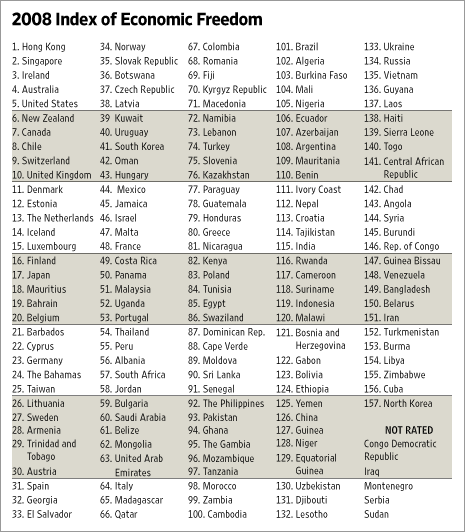 Source of table: online version of the WSJ article quoted and cited above.
 Source of book image:
 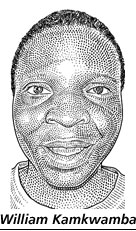 Source of the image: online version of the WSJ article quoted and cited below.


