Study Finds Lack of Control at Office Is Deadly for Men

(p. C12) . . . Israeli scientists found that the factor most closely linked to health was the support of co-workers: Less-kind colleagues were associated with a higher risk of dying. While this correlation might not be surprising, the magnitude of the effect is unsettling. According to the data, middle-age workers with little or no “peer social support” in the workplace were 2.4 times more likely to die during the study.
But that wasn’t the only noteworthy finding. The researchers also complicated longstanding ideas about the relationship between the amount of control experienced by employees and their long-term health. Numerous studies have found that the worst kind of workplace stress occurs when people have little say over their day. These employees can’t choose their own projects or even decide which tasks to focus on first. Instead, they must always follow the orders of someone else. They feel like tiny cogs in a vast corporate machine.
Sure enough, this new study found that a lack of control at the office was deadly–but only for men. While male workers consistently fared better when they had some autonomy, female workers actually fared worse. Their risk of mortality was increased when they were put in positions with more control.
While it remains unclear what’s driving this unexpected effect, one possibility is that motherhood transforms control at the office–normally, a stress reducer–into a cause of anxiety. After all, having a modicum of control means that women must constantly navigate the tensions between work and family. Should they stay late at their job? Or go home and help take care of the kids? This choice is so stressful that it appears to increase the risk of death.

For the full summary, see:
JONAH LEHRER. “HEAD CASE; Your Co-Workers Might Be Killing You; Hours don’t affect health much–but unsupportive colleagues do.” The Wall Street Journal (Sat., August 20, 2011): C12.
(Note: ellipsis added.)

The paper referred to in the quote from Lehrer’s summary is:
Shirom, Arie, Sharon Toker, Yasmin Alkaly, Orit Jacobson, and Ran Balicer. “Work-Based Predictors of Mortality: A 20-Year Follow-up of Healthy Employees.” Health Psychology 30, no. 3 (May 2011): 268-75.
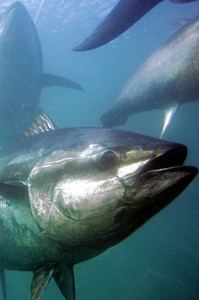

BP Oil Spill Does Little Harm to Tuna

BluefinTuna2012-01-30.jpg

“The Gulf of Mexico’s bluefin-tuna population is likely to be cut by less than 4% because of the BP oil spill.” Source of caption and photo: online version of the WSJ article quoted and cited below.

(p. A6) Fears that last year’s BP PLC oil spill would decimate the bluefin tuna that spawn in the Gulf of Mexico haven’t played out, with the population of the prized fish likely to be cut by less than 4%, a federal study has concluded.

The oil from the biggest offshore spill in U.S. history covered about one-fifth of the habitat of the Gulf’s recently hatched tuna, and scientists feared that could hammer the future population of the fish.
An analysis based on two different models by the National Oceanic and Atmospheric Administration, or NOAA, has concluded that the spill “will likely result in less than a 4% reduction in future spawning biomass” of bluefin tuna in the Gulf.
. . .
Russell Miget, an environmental and seafood quality specialist with Texas A&M University who wasn’t associated with the research, said the tuna study squared with other data suggesting that the impact of the spill on marine life was “less than what people were concerned about at the time of the spill.” Still, “fishery science is not an exact science,” he said.

For the full story, see:
GAUTAM NAIK and NATHAN KOPPEL. “Bluefin Tuna Thrive Despite Oil Spill.” The Wall Street Journal (Tues., December 6, 2011): A6.
(Note: ellipsis added.)
(Note: the online version of the article had the title “Bluefin Tuna Endure After Oil Spill.”)

How to Slow Down Creative Destruction

(p. 356) This catallaxy will not go smoothly, or without resistance. Natural and unnatural disasters will still happen. Governments will bail out big corporations and big bureaucracies, hand them special favours such as subsidies or carbon rations and regulate them in such a way as to create barriers to entry, slowing down creative destruction. Chiefs, priests, thieves, financiers, consultants and others will appear on all sides, feeding off the surplus (p. 357) generated by exchange and specialisation, diverting the life-blood of the catallaxy into their own reactionary lives. It happened in the past. Empires bought stability at the price of creating a parasitic court; monotheistic religions bought social cohesion at the price of a parasitic priestly class; nationalism bought power at the expense of a parasitic military; socialism bought equality at the price of a parasitic bureaucracy; capitalism bought efficiency at the price of parasitic financiers.

Source:
Ridley, Matt. The Rational Optimist: How Prosperity Evolves. New York: Harper, 2010.

Kickstarter Helps Finance Projects

KickstarterProjects2012-01-29.jpg “The creators of the TikTok Watchband, left, and the Elevation Dock have raised far more money on Kickstarter than they initially sought.” Source of caption and photo: online version of the NYT article quoted and cited below.

(p. B1) Kickstarter is a “crowd-funding” site. It’s a place for creative people to get enough start-up money to get their projects off the ground. The categories include music, film, art, design, food, publishing and technology. The projects seeking support might be recording a CD, putting on a play, producing a short film or developing a cool new tech product.

Suppose you’re the one who needs money. You describe your project with a video, a description and a target dollar amount. Listing your project is free.
If the citizens of the Web pledge enough money to meet your target by the deadline you set, then you get your money and (p. B7) you proceed with your project. At that point, Kickstarter takes 5 percent, and you pay 3 to 5 percent to Amazon.com’s credit card service.
If you don’t raise the money by the deadline, the deal is off. Your contributors keep their money, and Kickstarter takes nothing.
But here’s the part I had trouble understanding: These are not investments. If you make a pledge, you’ll never see your money again, even if the play, movie or gadget becomes a huge hit. You do get some little memento of your financial involvement — a T-shirt or a CD, for example, or a chance to preorder the gadget being developed — but nothing else tangible. Not even a tax deduction.
Furthermore, you have no guarantee that the project will even see the light of day. All kinds of things happen between inspiration and production. People lose interest, get married, move away, have trouble lining up a factory. The whole thing dies, and it was all for nothing.
So why, I kept wondering, does anybody participate? Who would give money for so little in return?
. . .
I started reading about . . . projects. The one that seemed to be drumming up the most interest lately is called the Elevation Dock. It’s just a charging stand for the iPhone, but wow, what a stand. It’s exquisitely milled from solid, Applesque aluminum. You don’t have to take your iPhone (or iPod Touch) out of its case to insert it into this dock. And the dock is solid enough that you can yank the phone out of it with one hand. The dock stays on the desk.
. . .
Other projects seeking your support: Jaja, a drawing stylus for iPad and Android tablets that’s pressure-sensitive (makes fatter lines when you bear down harder); LED Side Glow Hats (baseball caps with illuminated brims for working in dark places); Eye3 (an inexpensive flying drone for aerial photography); and so on.
Not all of them will reach their financing goals (only 44 percent do). Even fewer will wind up on store shelves.
But in dark economic times, Kickstarter offers aspirational voyeurism: you can read about the big dreams of the little people. And you can give the worthy artists a small financial vote of confidence — and enjoy the ride with them.

For the full story, see:
DAVID POGUE. “STATE OF THE ART; Embracing the Mothers of Invention.” The New York Times (Thurs., January 26, 2012): B1 & B7.
(Note: ellipses added.)
(Note: the online version of the article was dated January 25, 2012.)

Evidence that IQ Is Half Nature and Half Nurture

(p. C4) Hardly any subject in science has been so politically fraught as the heritability of intelligence. For more than a century, since Francis Galton first started speculating about the similarities of twins, nature-nurture was a war with a stalemated front and intelligence was its Verdun–the most hotly contested and costly battle.
So would it not be rather wonderful if a scientific discovery came along that called a truce and calmed all the fury? I think this is about to happen. Call it the Goldilocks theory of intelligence: not too genetic, not too environmental–and proving that intelligence is impossible to meddle with, genetically.
The immediate cause of this optimism is a recent paper in Molecular Psychiatry, which confirms that genes account for about half of the difference in IQ between any two people in a modern society, but that the relevant genes are very numerous and the effect of each is very small.

For the full commentary, see:
MATT RIDLEY. “MIND & MATTER; A Truce in the War Over Smarts and Genes.” The Wall Street Journal (Sat., August 20, 2011): C4.

The paper refereed to in the quote from Ridley’s commentary is:
Davies, G., A. Tenesa, A. Payton, J. Yang, S. E. Harris, D. Liewald, X. Ke, S. Le Hellard, A. Christoforou, M. Luciano, K. McGhee, L. Lopez, A. J. Gow, J. Corley, P. Redmond, H. C. Fox, P. Haggarty, L. J. Whalley, G. McNeill, M. E. Goddard, T. Espeseth, A. J. Lundervold, I. Reinvang, A. Pickles, V. M. Steen, W. Ollier, D. J. Porteous, M. Horan, J. M. Starr, N. Pendleton, P. M. Visscher, and I. J. Deary. “Genome-Wide Association Studies Establish That Human Intelligence Is Highly Heritable and Polygenic.” Molecular Psychiatry 16, no. 10 (October 2011): 996-1005.

Is “The Replicator” the Personal Fabricator of Gershenfeld’s Dreams?

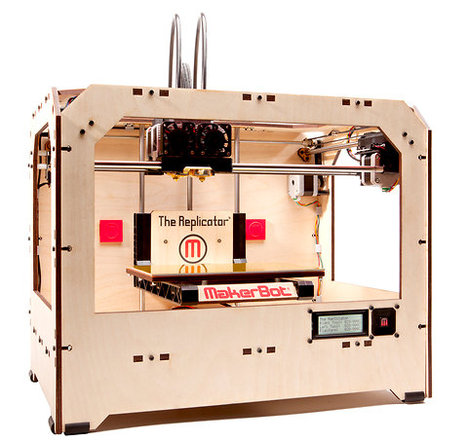
Replicator3Dprinter2012-01-28.jpgThe Replicator 3-D printer. Source of photo: online version of the NYT article quoted and cited below.

Back in 2005 technology “visionary” Neil Gershenfeld predicted the soon to be seen day when personal fabricators would follow the path of computers which progressed from mainframes costing millions to mini-computers costing hundreds of thousands to personal computers costing a couple of thousand. Well apparently that day is here.
Now we will see if the implications are as far-reaching as Gershenfeld predicted.

(p. B7) By now you may have heard about the Replicator, a $1,750 3-D printer made by the Brooklyn start-up MakerBot, due next month. If not, the significance of the Replicator is that it is the first 3-D printer to break the $2,000 barrier. Here’s more about what the Replicator can and can’t do.

Q. What does a 3-D printer use?
A: Spools of coiled A.B.S. (acrylonitrile butadiene styrene) plastic that costs about $45 each per kilogram. This is the same materials that is used to make Lego blocks. It is strong, safe and comes in many colors. One spool can make about 176 chess pieces.

For the full story, see:
WARREN BUCKLEITNER. “Gadgetwise; A 3-D Printer for Under $2,000: What Can It Do?” The New York Times (Thurs., January 26, 2012): B7.
(Note: bold in original.)
(Note: the online version of the article was dated January 23, 2012, and had the title “3-D Printing for the Masses: MakerBot’s Replicator.” The online version differs in several places from the print version. Where they differ, I quote the print version.)

The Gershenfeld book discussed above is:
Gershenfeld, Neil. Fab: The Coming Revolution on Your Desktop–from Personal Computers to Personal Fabrication. New York: Basic Books, 2005.

Creative Destruction Creates as Many New Jobs as It Destroys

(p. 113) It was Joseph Schumpeter who pointed out that the competition which keeps a businessman awake at night is not that from his rivals cutting prices, but that of entrepreneurs making (p. 114) his product obsolete. As Kodak and Fuji slugged it out for dominance in the 35mm film industry in the 1990s, digital photography began to extinguish the entire market for analogue film – as analogue records and analogue video cassettes had gone before. Creative destruction, Schumpeter called it. His point was that there is just as much creation going on as destruction – that the growth of digital photography would create as many jobs in the long run as were lost in analogue, or that the savings pocketed by a Wal-Mart customer are soon spent on other things, leading to the opening of new stores to service those new demands. In America, roughly 15 per cent of jobs are destroyed every year; and roughly 15 per cent created.

Source:
Ridley, Matt. The Rational Optimist: How Prosperity Evolves. New York: Harper, 2010.

First Human Tools 1.76 Million Years Ago

ToolsOldestYet2012-01-21.jpg

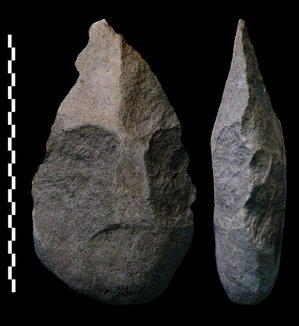
“A study dates human tools like this ax to 1.76 million years ago.”

(p. A8) A new geological study, being reported Thursday in the journal Nature, showed that tools from a site near Lake Turkana in Kenya were made about 1.76 million years ago, the earliest of their ilk found so far. Previous dates were estimates ranging from 1.4 million to 1.6 million years ago.

Although no erectus fossils were found with the Turkana tools, a skull of that species was excavated last year in the same sediment level across the lake. This suggests that Homo erectus was responsible for these particular tools, which were made with what scientists refer to as Acheulean technology. The term connotes the type of oval and pear-shaped hand axes and other implements that were a specialty of early humans.

For the full story, see:
JOHN NOBLE WILFORD. “Earliest Signs of Advanced Tools Found.” The New York Times (Thurs., September 1, 2011): A8.
(Note: ellipsis added.)
(Note: the online version of the article was dated August 31, 2011.)

More Options Can Result in Focus on Quality Instead of Choice Paralysis

(p. C4) Much of the research on decision-making focuses on the “choice paralysis” commonly thought to result from having too many options. But new research suggests that instead of being a debilitating factor, having many options actually sharpens our focus on quality.

For the full summary, see:
DAVID DISALVO. “Commerce; Choosing the Very Best.” The Wall Street Journal (Sat., August 20, 2011): C4.

The paper summarized is:
Bertini, Marco, Luc Wathieu, and Sheena S. Sethi-Iyengar. “The Discriminating Consumer: Product Proliferation and Willingness to Pay for Quality.” SSRN eLibrary (2010).

Intuit Aimed to End Hassle and Was Mainly Self-Financed at Start

CookScottIntuitCoFounder2012-01-21.jpg

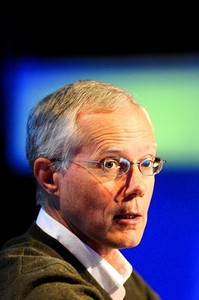
“Scott Cook.” Source of caption and photo: online version of the WSJ article quoted and cited below.

(p. B4) WSJ: Before building Intuit, you worked at large firms like Procter & Gamble Co. and Bain & Co. What prompted you to leave Corporate America and start your own business?

Mr. Cook: My wife complained about doing the bills. It was a hassle. I had been trained at P&G to find a problem that everybody has and that you could solve with technology. And this struck me as a classic entrepreneurial opportunity. Nobody likes to pay bills. There were about 20-plus personal-finance software products already on the market.
. . .
WSJ: How much start-up capital did have to work with?
Mr. Cook: We raised between $500,000 and $600,000. It came from my savings and my retirement plan that I cashed out. I also borrowed money from my parents. Lines of credit were another big source of capital. The banks were lending to me and my wife as a couple, not the business. We tried venture capital and that failed. We talked to about two dozen venture-capital firms and they all shut us down. We did get two angels to invest, but they put in only $151,000, total.

For the full interview, see:
SARAH E. NEEDLEMAN. “HOW I BUILT IT; For Intuit Co-Founder, the Numbers Add Up” The Wall Street Journal (Thurs., AUGUST 18, 2011): B4.
(Note: ellipsis added.)

Paleolithic Homo Sapiens Engaged in Long Distance Trade

(p. 71) At Mezherich, in what is now Ukraine, 18,000 years ago, jewellery made of shells from the Black Sea and amber from the Baltic implied trade over hundreds of miles.
This is in striking contrast to the Neanderthals, whose stone tools were virtually always made from raw material available within an hour’s walk of where the tool was used.

Source:
Ridley, Matt. The Rational Optimist: How Prosperity Evolves. New York: Harper, 2010.