
Vaclav Havel Fought for Freedom

HavelVaclavMourningWenceslasSquare2012-01-21.jpg“Mourning; Thousands gathered on Sunday in Wenceslas Square in Prague, some under a Czech national flag, to marke the death of Vaclav Havel.” Source of caption: print version of the NYT obituary quoted and cited below. Source of photo: http://4.bp.blogspot.com/-PGUPpCvWzRQ/Tu9C59lXdJI/AAAAAAAAAEQ/0lcI7EfO8P4/s1600/Vaclav%2BHavel%2B3.jpg [The photo appeared on p. A10 of the print version of the obituary, but was not included with the online version.]

(p. A1) Vaclav Havel, the Czech writer and dissident whose eloquent dissections of Communist rule helped to destroy it in revolutions that brought down the Berlin Wall and swept Mr. Havel himself into power, died on Sunday. He was 75.
. . .
A shy yet resilient, unfailingly polite but dogged man who articulated the power of the powerless, Mr. Havel spent five years in and out of Communist prisons, lived for two decades under close secret-police surveillance and endured the suppression of his plays and essays. He served 14 years as president, wrote 19 plays, inspired a film and a rap song and remained one of his generation’s most seductively nonconformist writers.
All the while, Mr. Havel came to personify the soul of the Czech nation.
His moral authority and his moving use of the Czech language cast him as the dominant figure during Prague street demonstrations in 1989 and as the chief behind-the-scenes negotiator who brought about the end of more than 40 years of Communist rule and the peaceful transfer of power known as the Velvet Revolution, a revolt so smooth that it took just weeks to complete, (p. A10) without a single shot fired.
. . .
He never stopped preaching that the fight for political freedom needed to outlive the end of the cold war. He praised the American invasion of Iraq for deposing a dictator, Saddam Hussein.
He continued to worry about what he called “the old European disease” — “the tendency to make compromises with evil, to close one’s eyes to dictatorship, to practice a politics of appeasement.”

For the full obituary, see:
DAN BILEFSKY and JANE PERLEZ. “VACLAV HAVEL, 1936-2011; Czechs’ Dissident Conscience, Turned President.” The New York Times (Mon., December 19, 2011): A1 & A10.
(Note: ellipses added.)
(Note: the online version of the obituary is dated December 18, 2011, and had the title “VACLAV HAVEL, 1936-2011; Vaclav Havel, Former Czech President, Dies at 75.”)
Personal Risk Lovers Make Better CEOs?

(p. C4) Chief executives with a penchant for personal risk-taking are also corporate risk-takers who take on more debt, aggressively pursue mergers and acquisitions, and make bold equity plays. But, in general, they are also more effective leaders who create more value in their organizations than their less risk-loving counterparts. And they do so, the researchers add, without additional incentives; they imprint their risk-loving natures on their companies because it’s simply who they are.

For the full summary, see:
DAVID DISALVO. “Management; For Effective CEOs, Look Up.” The Wall Street Journal (Sat., August 20, 2011): C4.

The article summarized is:
Cain, Matthew D., and Stephen B. McKeon. “Cleared for Takeoff? CEO Personal Risk-Taking and Corporate Policies.” SSRN eLibrary (2011).

California Vegan Defends Freedom to Choose McDonald’s

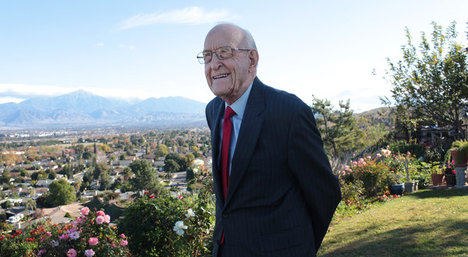
WarehamEllsworthVegan2012-01-21.jpg “Ellsworth Wareham, 97, in Loma Linda, Calif. Mr. Wareham was a heart surgeon who stopped working only two years ago. He is a vegan, but says choice is part of the “great American system.”” Source of caption and photo: online version of the NYT article quoted and cited below.

(p. A15) . . . last week, when the City Council approved Loma Linda’s first McDonald’s restaurant, many residents bemoaned the decision, worrying that the officials were jeopardizing the city’s reputation as a paragon of healthy lifestyles.
. . .
. . . , Dr. Rigsby [said] . . . he would support having a citywide vote on whether fast-food outlets should be banned entirely from the city. “If this is something that people are really opposed to, that’s how we should deal with it.”
What would happen during such a vote is anyone’s guess. Ellsworth Wareham, who stopped working as a heart surgeon only two years ago, at 95, is often used as an example of someone with more energy than someone half his age. Dr. Wareham attributes his health at least partly to the fact that he has been a vegan for the last 30 or 40 years (he does not remember precisely).
Eating at home, he said, is the best way to ensure that one is eating healthy food. He is certainly not about to let the impending arrival of McDonald’s raise his blood pressure.
“I don’t subscribe to the menu that these dear people put out, but let’s face it, the average eating place serves food that is, let us say, a little bit of a higher quality, but the end result is the same — it’s unhealthy,” he said.
“They can put it right next to the church as far as I am concerned,” Dr. Wareham added. “If they choose to eat that way, I’m not going to stop them. That’s the great American system.”

For the full story, see:
JENNIFER MEDINA. “LOMA LINDA JOURNAL; Fast-Food Outlet Stirs Concerns in a Mecca of Healthy Living.” The New York Times (Mon., December 19, 2011): A15.
(Note: ellipses added.)
(Note: the online version of the article is dated December 18, 2011.)

Hunter-Gatherers Suffered Violence, Famine and Disease–No Idyllic Golden Age

(p. 44) The warfare death rate of 0.5 per cent of the population per year that was typical of many hunter-gatherer societies would equate to two billion people dying during the twentieth century (instead of 100 million). At a cemetery uncovered at Jebel Sahaba, in Egypt, dating from 14,000 years ago, twenty-four of the fifty-nine bodies had died from unhealed wounds caused by spears, darts and arrows. Forty of these bodies were women or children. Women and children generally do not take part in warfare – but they are (p. 45) frequently the object of the fighting. To be abducted as a sexual prize and see your children killed was almost certainly not a rare female fate in hunter-gatherer society. After Jebel Sahaba, forget the Garden of Eden; think Mad Max.
It was not just warfare that limited population growth. Hunter-gatherers are often vulnerable to famines. Even when food is abundant, it might take so much travelling and trouble to collect enough food that women would not maintain a sufficient surplus to keep themselves fully fertile for more than a few prime years. Infanticide was a common resort in bad times. Nor was disease ever far away: gangrene, tetanus and many kinds of parasite would have been big killers. Did I mention slavery? Common in the Pacific north-west. Wife beating? Routine in Tierra del Fuego. The lack of soap, hot water, bread, books, films, metal, paper, cloth? When you meet one of those people who go so far as to say they would rather have lived in some supposedly more delightful past age, just remind them of the toilet facilities of the Pleistocene, the transport options of Roman emperors or the lice of Versailles.

Source:
Ridley, Matt. The Rational Optimist: How Prosperity Evolves. New York: Harper, 2010.

“Just What Ailments Are Pylos Tablets Supposed to Alleviate?”

LinearBscript2012-01-14.jpg

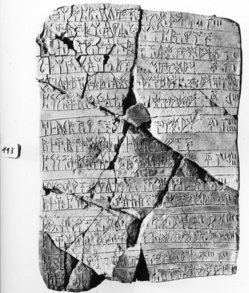
“Professor Bennett’s work opened a window to deciphering tablets written in Linear B, a Bronze Age Aegean script.” Source of caption and photo: online version of the NYT obituary quoted and cited below.

(p. 22) Deciphering an ancient script is like cracking a secret code from the past, and the unraveling of Linear B is widely considered one of the most challenging archaeological decipherments of all time, if not the most challenging.
. . .
Linear B recorded the administrative workings of Mycenaean palatial centers on Crete and the Greek mainland 3,000 years ago: accounts of crops harvested, flocks tended, goods manufactured (including furniture, chariots and perfume), preparations for religious feasts and preparations for war.
It was deciphered at last in 1952, not by a scholar but by an obsessed amateur, a young English architect named Michael Ventris. The decipherment made him world famous before his death in an automobile accident in 1956.
As Mr. Ventris had acknowledged, he was deeply guided by Professor Bennett’s work, which helped impose much-needed order on the roiling mass of strange, ancient symbols.
In his seminal monograph “The Pylos Tablets” (1951), Professor Bennett published the first definitive list of the signs of Linear B. Compiling such a list is the essential first step in deciphering any unknown script, and it is no mean feat.
. . .
“We know how much Ventris admired Bennett, because he immediately adopted Bennett’s sign list of Linear B for his own work before the decipherment,” said Mr. Robinson, whose book “The Man Who Deciphered Linear B” (2002) is a biography of Mr. Ventris. “He openly said, ‘This is a wonderful piece of work.’ ”
. . .
As meticulous as Professor Bennett’s work was, it once engendered great confusion. In 1951, after he sent Mr. Ventris a copy of his monograph, a grateful Ventris went to the post office to pick it up. As Mr. Robinson’s biography recounts, a suspicious official, eyeing the package, asked him: “I see the contents are listed as Pylos Tablets. Now, just what ailments are pylos tablets supposed to alleviate?”

For the full obituary, see:
MARGALIT FOX. “Emmett L. Bennett Jr., Ancient Script Expert, Dies at 93.” The New York Times, First Section (Sun., January 1, 2012,): 22.
(Note: ellipses added.)
(Note: the online version of the obituary is dated December 31, 2011, and has the title: “Emmett L. Bennett Jr., Expert on Ancient Script, Dies at 93.”)

The book on the amateur, uncredentialed Ventris is:
Robinson, Andrew. The Man Who Deciphered Linear B: The Story of Michael Ventris. London, UK: Thames & Hudson, 2002.

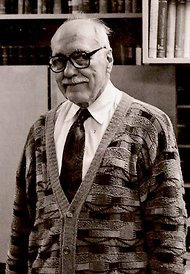
BennettEmmettJr2012-01-14.jpg

“Emmett L. Bennett Jr.” Source of caption and photo: online version of the NYT obituary quoted and cited above.

Gary Becker Says “Economics Trumps Culture”

At the Chicago American Economic Association (AEA) meetings, I attended an 8 AM session on Sun., Jan. 8, 2012 in honor of the 30 anniversary of Gary Becker’s Treatise on the Family. At the end of the session, Becker discussed five issues related to the book.
One of these was the question of whether the features of the family are best understood on the basis of economic issues or cultural issues. He mentioned two examples: the Irish family and the Asian family. In the past it had been claimed that the Irish family would have enduring features due to religion and culture, features such as many children and women who stayed at home. Today, Becker noted, the Irish family looks much like other European families. He then paraphrased Singapore’s former ruler Lee Kuan Yew as having claimed in the past that the Asian family is superior to the Western family in its cohesiveness and loyalty. Today, Becker noted, Asian families look much more like Western families. Becker concluded that in the short run cultural factors may dominate, but that in the long run economic factors dominate. He said “Economics trumps culture.”
Becker’s discussion has broader relevance. One of the issues that I am grappling with in my research and teaching is the extent to which success at entrepreneurial innovation depends on cultural differences and the extent to which it depends on differences in constraints and policies.
If policies matter more, then it is easier to see a clear path toward progress, than if murkier cultural issues matter more.

Branson Advises Entrepreneurs: “Think of What Frustrates You”

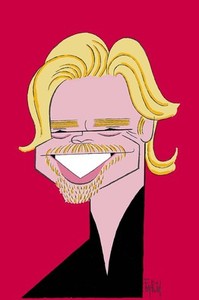
BransonRichardCaricature2012-01-13.jpg

Source of caricature: online version of the WSJ interview quoted and cited below.

(p. A13) Governments have long dominated space, starting with the Soviet Union’s 1957 launch of Sputnik 1. The U.S. soon followed. “If they’d used just a small fraction of that money as prize money and given it to the best commercial companies, that money would’ve been far better spent,” Mr. Branson muses. “The $10 million [Ansari] X Prize very much sparked our move into space travel,” he notes, referring to the competition organized by entrepreneur Peter Diamandis and launched in 1996.

Mr. Branson had dreamed of exploring the final frontier for decades. “I think it just simply goes back to watching the moon landing on blurry black-and-white television when I was a teenager and thinking, one day I would go to the moon–and then realizing that governments are not interested in us individuals and creating products that enable us to go into space,” he says. In 1995, after making billions of dollars in the music and airline businesses, Mr. Branson registered a new company, Virgin Galactic (the name “sounded good”), at London’s Companies House. Then the company started searching for rocket scientists and the right technology.
Several years later, in July 2002, Virgin’s team traveled to California to check on American aerospace designer Burt Rutan’s progress on the Virgin Atlantic Global Flyer, a plane built “to circumnavigate the globe non-stop on a single tank of fuel,” according to Virgin’s website. Virgin discovered that Mr. Rutan intended to compete for the X Prize with SpaceShip One, the world’s first privately developed spacecraft, financed by Microsoft co-founder Paul Allen.
Mr. Branson quickly struck a deal: Virgin would license Mr. Rutan’s SpaceShip One technology from Mr. Allen if he won the competition. In 2004, Mr. Rutan did just that, and Virgin Galactic was off to the races.
. . .
So what advice does Mr. Branson have for aspiring entrepreneurs? “Think of what frustrates you–and if you’re frustrated by something and you feel ‘Dammit, if only people could do this better,’ then go try to do it better yourself. It can start off in a really small way . . . and you’ll be surprised: If you’re doing it better yourself, in whatever field it is, you’ll be filling a gap and you suddenly might start creating a business.”

For the full interview, see:
MARY KISSEL. “THE WEEKEND INTERVIEW with Richard Branson; Space: The Next Business Frontier; By next Christmas the airline mogul could be ferrying paying customers outside the atmosphere–and, later, to the bottom of the ocean.” The Wall Street Journal (Sat., December 17, 2011): A13.
(Note: ellipsis added.)

You Have More Servants than the Sun King

(p. 36) The Sun King had dinner each night alone. He chose from forty dishes, served on gold and silver plate. It took a staggering 498 people to prepare each meal. He was rich because he consumed the work of other people, mainly in the form of their services. He was rich because other people did things for him. At that time, the average French family would have prepared and consumed its own meals as well as paid tax to support his servants in the palace. So it is not hard to conclude that Louis XIV was rich because others were poor.
But what about today? Consider that you are an average person, say a woman of 35, living in, for the sake of argument, Paris and earning the median wage, with a working husband and two children. You are far from poor, but in relative terms, you are immeasurably poorer than Louis was. Where he was the richest of the rich in the world’s richest city, you have no servants, no palace, no carriage, no kingdom. As you toil home from work on the crowded Metro, stopping at the shop on the way to buy a ready meal for four, you might be thinking that Louis XIV’s dining arrangements were way beyond your reach. And yet consider this. The cornucopia that greets you as you enter the supermarket dwarfs anything that Louis XIV ever experienced (and it is probably less likely to contain salmonella). You can buy a fresh, frozen, tinned, smoked or pre-prepared meal made with beef, chicken, pork, lamb, fish, prawns, scallops, eggs, potatoes, beans, carrots, cabbage, aubergine, kumquats, celeriac, okra, seven kinds of lettuce, cooked in olive, walnut, sunflower or peanut oil and flavoured with cilantro, turmeric, basil or rosemary . . . You may have no chefs, but you can decide (p. 37) on a whim to choose between scores of nearby bistros, or Italian, Chinese, Japanese or Indian restaurants, in each of which a team of skilled chefs is waiting to serve your family at less than an hour’s notice. Think of this: never before this generation has the average person been able to afford to have somebody else prepare his meals.
You employ no tailor, but you can browse the internet and instantly order from an almost infinite range of excellent, affordable clothes of cotton, silk, linen, wool and nylon made up for you in factories all over Asia. You have no carriage, but you can buy a ticket which will summon the services of a skilled pilot of a budget airline to fly you to one of hundreds of destinations that Louis never dreamed of seeing. You have no woodcutters to bring you logs for the fire, but the operators of gas rigs in Russia are clamouring to bring you clean central heating. You have no wick-trimming footman, but your light switch gives you the instant and brilliant produce of hardworking people at a grid of distant nuclear power stations. You have no runner to send messages, but even now a repairman is climbing a mobile-phone mast somewhere in the world to make sure it is working properly just in case you need to call that cell. You have no private apothecary, but your local pharmacy supplies you with the handiwork of many thousands of chemists, engineers and logistics experts. You have no government ministers, but diligent reporters are even now standing ready to tell you about a film star’s divorce if you will only switch to their channel or log on to their blogs.
My point is that you have far, far more than 498 servants at your immediate beck and call. Of course, unlike the Sun King’s servants, these people work for many other people too, but from your perspective what is the difference? That is the magic that exchange and specialisation have wrought for the human species.

Source:
Ridley, Matt. The Rational Optimist: How Prosperity Evolves. New York: Harper, 2010.
(Note: ellipsis in original.)

Krim Saw Use for Noisy CK722 Transistors

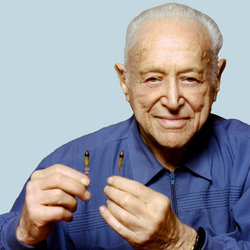
KrimNorman2012-01-13.jpg

Norman Krim holding some early transistors. He first put transistors into hearing aids. Source of caption and photo: online version of the NYT obituary quoted and cited below.

(p. B11) Mr. Krim, who made several breakthroughs in a long career with the Raytheon Company and who had an early hand in the growth of the RadioShack chain, did not invent the transistor. (Three scientists did, in 1947, at Bell Laboratories.)

But he saw the device’s potential and persuaded his company to begin manufacturing it on a mass scale, particularly for use in miniaturized hearing aids that he had designed. Like the old tube, a transistor amplifies audio signals.
As Time magazine wrote in 1953: “This little device, a single speck of germanium, is smaller than a paper clip and works perfectly at one-tenth the power needed by the smallest vacuum tube. Today, much of Raytheon’s transistor output goes to America’s hearing aid industry.” (Germanium, a relatively rare metal, was the predecessor to silicon in transistors.)
. . .
Thousands of hearing-disabled people benefited from Mr. Krim’s initial use of the transistor in compact hearing aids. But not every transistor Raytheon made was suitable for them, he found.
“When transistors were first being manufactured by Raytheon on a commercial scale, there was a batch called CK722s that were too noisy for use in hearing aids,” said Harry Goldstein, an editor at IEEE Spectrum, the magazine of the Institute of Electrical and Electronics Engineers.
So Mr. Krim contacted editors at magazines like Popular Science and Radio Electronics and began marketing the CK722s to hobbyists.
“The result was that a whole generation of aspiring engineers — kids, really, working in their garages and basements — got to make all kinds of electronic projects,” Mr. Goldstein said, among them transistor radios, guitar amplifiers, code oscillators, Geiger counters and metal detectors. “A lot of them went on to become engineers.”
Mr. Ward called Mr. Krim “the father of the CK722.”

For the full obituary, see:
DENNIS HEVESI. “Norman Krim, 98, Dies; Championed the Transistor.” The New York Times (Weds, December 21, 2011): B11.
(Note: ellipsis added.)
(Note: the online version of the article is dated December 20, 2011 and has the title “Norman Krim, Who Championed the Transistor, Dies at 98.”)

What We Eat Affects Our Feelings and Choices?

But since we choose what we eat, we have the power to control how food affects our feelings and choices?

(p. C12) As the neuroscientist Antonio Damasio writes, “The mind is embodied, not just embrained.”

The latest evidence comes from a new study of probiotic bacteria, the microorganisms typically found in yogurt and dairy products. While most investigations of probiotics have focused on their gastrointestinal benefits–the bacteria reduce the symptoms of diarrhea and irritable bowel syndrome–this new research explored the effect of probiotics on the brain.
The experiment, led by Javier Bravo at University College Cork in Ireland, was straightforward. First, he fed normal lab mice a diet full of probiotics. Then, Mr. Bravo’s team tested for behavioral changes, which were significant: When probiotic-fed animals were put in stressful conditions, such as being dropped into a pool of water, they were less anxious and released less stress hormone.
How did the food induce these changes? The answer involves GABA, a neurotransmitter that reduces the activity of neurons. When Mr. Bravo looked at the brains of the mice, he found that those fed probiotics had more GABA receptors in areas associated with memory and the regulation of emotions. (This change mimics the effects of popular antianxiety medications in humans.)

For the full summary/commentary, see:
JONAH LEHRER. “HEAD CASE; The Yogurt Made Me Do It; There’s nothing metaphorical about ‘gut feelings’–bacteria influence our minds.” The Wall Street Journal (Sat., SEPTEMBER 17, 2011): C12.

The paper summarized is:
Bravo, Javier A., Paul Forsythe, Marianne V. Chew, Emily Escaravage, Hélène M. Savignac, Timothy G. Dinan, John Bienenstock, and John F. Cryan. “Ingestion of Lactobacillus Strain Regulates Emotional Behavior and Central GABA Receptor Expression in a Mouse Via the Vagus Nerve.” Proceedings of the National Academy of Sciences (2011).

In Supporting Bailouts Buffett Was More Bootlegger than Baptist

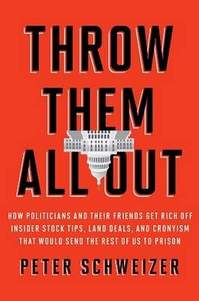
ThrowThemAllOutBK.jpg

Source of book image: online version of the Omaha World-Herald review quoted and cited below.

(p. 9A) Peter Schweizer’s new book, “Throw Them All Out” (Houghton Mifflin Harcourt, 211 pages, $26) mostly goes after members of Congress for profiting from inside information and making investments that are legal for them but would be illegal for almost anyone else.

But Chapter 6 is titled, “Warren Buffett: Baptist and Bootlegger.”
Buffett is neither an actual Baptist nor a bootlegger, of course. Schweizer’s reference is to the alliance of churchgoers and illegal marketers of liquor who both favored laws to limit the legal sale of alcohol, although for different reasons.
Schweizer wrote that during the 2008-09 financial crisis, Buffett pushed for government action and called attention to the problems, looking like a noble Baptist, but profited from the bailouts, like a bootlegger, through investments in Goldman Sachs, General Electric, Wells Fargo and other financial companies.
“Buffett needed the bailout,” Schweizer wrote. “He began immediately to campaign for the $700 billion TARP rescue plan that was being hammered together in Washington.” Several senators, including Ben Nelson, D-Neb., are Berkshire shareholders, Schweizer wrote, “and they had to know that passing the bailout bill would bring big returns for their Berkshire stock.”
“There were many legitimate reasons to support the bill, and it can hardly be said that Buffett’s support was the deciding factor,” Schweizer wrote. “But his Baptist-bootlegger position was noteworthy for its strength in both directions: a lot of people followed his advice, and he and they made (p. 10A) a lot of money by pushing for the bailout. . . .
“Warren Buffett is a financial genius. But even more important for his portfolio, he’s a political genius.”

For the full story, see:
Steve Jordon. “Warren Watch: Author Says Buffett Is a ‘Political Genius’.” Omaha World-Herald (Sunday, November 20, 2011): 9A -10A.
(Note: ellipsis in original.)
(Note: the online version of the article has the title “Warren Watch: A ‘Political Genius’.”)

Steve Jordan is discussing the book:
Schweizer, Peter. Throw Them All Out. New York: Houghton Mifflin Harcourt Trade, 2011.

Bruce Yandle is the former President of APEE and the author of the classic article on how bootleggers and Baptists often become allies in calling for government action:
Yandle, Buce. “Bootleggers and Baptists: The Education of a Regulatory Economist.” Regulation 7, no. 3 (1983): 12-16.